Choosing whether to invest in custom injection molds or rely on off-the-shelf solutions is pivotal for manufacturers who aim to optimize their production processes. Custom molds offer precise fit and function tailored to unique specifications, while off-the-shelf molds bring reduced upfront costs and quicker deployment. Each option has distinct implications for cost, quality, and time-to-market.
Key takeaways
- Custom injection molds offer unlimited design possibilities that cater to unique product needs.
- Off-the-shelf molds come with a key advantage: lower initial investment.
- When precision and high production volumes are critical, custom molds offer superior performance.
- Off-the-shelf molds excel when time is of the essence.
- Select custom molds when your project demands highly specific designs or when quality and efficiency are paramount.
Custom Molds Offer Superior Design Flexibility
Custom injection molds offer unlimited design possibilities that cater to unique product needs.
Unlike off-the-shelf molds which are pre-defined, custom molds are built to your exact specifications, allowing for complex geometries and intricate designs. With a custom mold, you can achieve features that standard molds simply can’t support, such as complex undercuts or internal channels.
Design flexibility is particularly valuable for industries requiring precision components. For instance, automotive part manufacturers often demand tight tolerances and unique geometries that conform to specific mechanical or aesthetic criteria not available with generic mold templates. Complex designs like vents, ribs, or specific texturing are achievable, enhancing both functionality and visual appeal. Custom molds also offer the flexibility to adjust wall thickness for augmented structural integrity or to incorporate additional components, thereby integrating more functionality into a single part without the need for secondary operations.
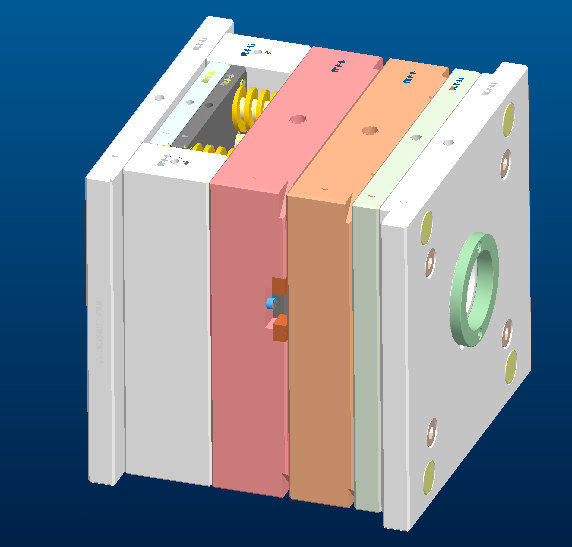
Furthermore, with advancements in simulation software such as Moldflow analysis, manufacturers can optimize mold design before production begins. This predictive modeling helps in identifying potential issues like warping or shrinkage early, enabling modifications to be made before costly tooling begins. Additionally, these simulations allow for precise temperature and pressure settings, significantly improving the final part quality. Such technological advancements minimize trial-and-error during production, offering a more efficient pathway to market with fewer iterations.
Off-the-Shelf Molds Reduce Upfront Costs
Off-the-shelf molds come with a key advantage: lower initial investment.
Since these molds are standardized and mass-produced, they eliminate the need for specialized design and manufacturing processes associated with custom molds. Costs associated with custom molds can be considerably higher, with design and tooling expenses often running into tens of thousands of dollars.
This cost efficiency makes off-the-shelf molds attractive to small-scale operations or startups requiring an economical entry point into injection molding. In sectors where frequent model changes are common, opting for off-the-shelf molds can be practical to reduce sunk costs associated with ever-evolving designs. Industries where uniformity is preferable, such as in the production of simple plastic containers, often find off-the-shelf molds to be sufficient.
Additionally, maintenance and repair of off-the-shelf molds are generally more straightforward and cost-effective, given their standardized components. This reduces downtime and ensures continuity in production, which can be crucial for operations requiring constant output. Furthermore, because these molds are readily available, replacement or additional molds can be sourced quickly, reducing the risk of production halts and enabling scalability as needed.
Custom Molds Enhance Production Efficiency
When precision and high production volumes are critical, custom molds offer superior performance.
Custom molds can be optimized for specific materials, cycle times, and production metrics. For example, material flow can be finely tuned to reduce cycle time and improve part quality, which is harder to achieve with a generic mold.
By ensuring optimal material distribution, custom molds reduce instances of defects such as sink marks or warping. For high-volume production runs, the upfront cost of custom molds is often offset by the savings gained through improved cycle efficiency and reduced wastage. For example, YIOT’s experience in precision mold design ensures that the production cycle is robust, minimizing interruptions and enhancing overall line efficiency. This fine-tuning at the mold design stage translates to a smoother, faster production process with fewer defects, which is ideal for delivering high-quality parts consistently.
Custom molds also allow for streamlined assembly processes. By designing molds that incorporate features such as self-locating parts or snap-fit joints, manufacturers can negate additional assembly steps, expediting the overall production cycle. This integration minimizes the labor required for assembly, further contributing to cost savings and efficiency. Furthermore, because custom molds can be tailored to specific assembly line parameters, they allow more seamless transitions between molding and additional finishing processes.
Off-the-Shelf Molds Offer Faster Turnaround
Off-the-shelf molds excel when time is of the essence. Lead time for acquiring off-the-shelf molds can be as short as a few weeks, compared to several months for custom mold development. This rapid availability is crucial for projects with tight deadlines or those requiring quick market entry.
Quick deployment is a critical factor for businesses launching new products where market timing is crucial to capture early consumers and gain competitive advantage. Furthermore, for test runs or limited edition products, off-the-shelf molds provide a swift and low-risk way to assess market response before committing to custom tooling. This flexibility is especially beneficial in dynamic markets, where trends can shift rapidly, necessitating a quick pivot in product offerings.
Project managers often appreciate the predictability in delivery schedules with off-the-shelf options, which aids in planning and reduces the chances of project delays. Partnering with a trusted supplier like YIOT, known for its rapid prototyping and standard mold availability, further expedites this process. Standard molds also allow for easier forecasting of production timelines, which can streamline project management and mitigate risks associated with scheduling conflicts.
Detailed Comparison of Custom vs. Off-the-Shelf Molds
Below is a detailed comparison table illustrating key differences between custom and off-the-shelf molds.
| Feature | Custom Mold | Off-the-Shelf Mold |
|---|---|---|
| Design Flexibility | Unlimited, supports complex geometries | Limited to standard designs |
| Upfront Costs | High due to design and tooling | Low as molds are pre-produced |
| Production Efficiency | Optimized for specific applications | Standard cycle times and efficiencies |
| Turnaround Time | Several months due to custom construction | Few weeks due to immediate availability |
| Ideal Use Cases | High volume, complex parts | Low volume, simple or standardized parts |
In conclusion, custom molds provide the advantage of precision and customization, while off-the-shelf molds favor economic constraints and speed to market. Understanding each project’s specific needs can significantly influence which mold type is best suited. The type of material used in production and the expected wear and tear on molds should also be considered. High-wear applications might necessitate frequent mold replacements or reinforcements, tipping the scale towards custom solutions.
Choose Custom Molds for Complex Requirements
Select custom molds when your project demands highly specific designs or when quality and efficiency are paramount.
If your product requires proprietary features or tight tolerances—such as those commonly needed in electronics enclosures or automotive components—custom molds are indispensable.
For producers dealing with stringent regulatory environments—such as medical or aerospace sectors—custom molds ensure compliance with necessary standards and specifications. Custom molds also support more efficient secondary operations, such as painting or additional machining, as the mold itself can accommodate specific post-production needs. This readiness for further processes can reduce lead times for assembly or finishing.
Furthermore, for high-volume production cycles, the cost per part could be lower with a custom mold, although there’s a need for substantial upfront investment. Over time, this investment can lead to significant cost savings per unit, particularly for runs exceeding tens of thousands of units, where efficiency gains underscore financial feasibility. Investing in custom molds aligns well with strategic objectives focused on long-term growth and market leadership.
Opt for Off-the-Shelf Molds for Simplicity and Speed
Off-the-shelf molds are ideal for projects with standard specifications where speed and low initial cost are priorities. They’re particularly useful in markets with highly competitive pricing, where reducing initial overhead can significantly impact your ability to penetrate the market effectively.
For smaller enterprises or new market entrants, off-the-shelf options bypass the technical intricacies involved with custom mold development. This simplicity allows teams to focus on product marketing and customer acquisition, potentially accelerating establishment in the market. The flexibility to easily swap mold designs for different product lines enhances adaptability to market demands without significant investment.
Moreover, off-the-shelf molds mitigate the risks associated with product iterations as they offer a platform to test and iterate design features without significant financial exposure. For short production runs, these molds are the practical choice ensuring quick adaptation and market response testing. This agile production capability supports businesses that need to respond quickly to consumer feedback or industry trends.
Common Missteps When Choosing Injection Molds
Buyers often make the mistake of focusing solely on upfront costs without considering long-term implications.
This oversight can lead to selecting off-the-shelf molds when custom solutions would provide better results in the long term.
Additionally, failing to account for specific material properties or production complexities can result in poor fit, functionality, or increased waste. Consulting with an experienced provider like YIOT, who understands these nuances, can help mitigate such risks and improve outcomes. Ignoring lead time considerations or misjudging the importance of prototype testing can further complicate project timelines and budget.
Another frequent error is underestimating the batch size requirements; custom molds tend to be more suitable for larger runs due to their efficiency, whereas attempting high-volume runs with off-the-shelf solutions can escalate long-term costs significantly. A detailed cost-benefit analysis is crucial to prevent expensive missteps in mold selection and justifying the investment with evidence-based forecasts.
Conclusion
In sum, custom injection molds prove superior when precision and high volume are essential, while off-the-shelf molds offer cost savings and speed.
Evaluate your specific needs and production goals carefully to determine the best fit for your project. While initial costs guide many decisions, a detailed understanding of long-term impacts and project specifics ultimately guides successful mold selection. Engaging with an experienced manufacturer like YIOT can further refine the decision-making process, ensuring alignment with strategic objectives. By considering material properties, product complexity, and market demands, manufacturers can make informed decisions that balance immediate and future requirements. This thoughtful approach ensures that the chosen mold solution aligns with both present needs and long-term business strategy, maximizing potential for success and growth.
Frequently asked questions
What are the main benefits of custom molds?
Custom molds provide design flexibility, better production efficiency, and are suited for large volumes of complex parts with precise specifications. They are advantageous for products that require proprietary features or when regulatory compliance is paramount. The ability to tailor designs specifically to product needs often results in higher quality and reduced waste. Additional benefits include optimized production cycle times and compatibility with a broader range of materials, enhancing both performance and longevity of the molds.
How can off-the-shelf molds benefit a startup?
Off-the-shelf molds are cost-effective and have quicker turnaround times, which is beneficial for startups needing to reduce costs and accelerate time-to-market. These molds offer a viable starting point with lower financial risks, allowing for agile product development and market testing. They also provide a platform for rapid prototyping, enabling startups to gather market feedback quickly and refine their offerings with minimal initial investment.
When should you avoid using off-the-shelf molds?
Avoid off-the-shelf molds if your project requires unique features or tight tolerances, as their fixed designs cannot accommodate specialized requirements. If your production volume is high or efficiency critical, custom molds would provide better long-term cost efficiency. The design constraints may limit innovation potential in rapidly evolving markets. Additionally, off-the-shelf molds may not support the technical requirements of advanced manufacturing processes, risking compromise in end-product quality.
Request a project review
Send the 3D model, 2D drawing, material requirements, annual volume and critical dimensions. The team will identify open technical questions before tooling is quoted.