When choosing molds for electronics cases, a key decision point is whether to opt for custom molds or off-the-shelf options. Custom molds offer tailored solutions specific to design needs, allowing for unique geometries and branding elements. They are ideal when the project has precise requirements, like specific airflow designs for cooling. On the flip side, off-the-shelf molds are faster and cheaper in some scenarios but might lack the precision and individuality custom molds provide. Deciding between the two requires weighing factors such as budget constraints, production volumes, and design complexity.
Key takeaways
- Custom injection molds are defined by their tailored design, crafted to meet specific dimensional and functional requirements of a unique part or assembly.
- Custom injection molds offer unmatched precision and customization potential, especially critical for electronics cases with complex geometries and unique features.
- When time is of the essence, off-the-shelf molds offer a compelling choice due to significantly faster lead times than custom molds.
- When it comes to electronics cases, custom injection molds and off-the-shelf molds stand apart on several quantitative fronts.
- Custom molds serve a pivotal role in applications demanding high precision or unique design specifications, particularly within the tech industries.
What You Need to Know About Custom and Off-the-Shelf Molds
Custom injection molds are defined by their tailored design, crafted to meet specific dimensional and functional requirements of a unique part or assembly.
Used predominantly in industries requiring high precision and customization, such as the automotive and medical sectors, these molds accommodate complex geometries and specialized materials, resulting in enhanced performance and reliability.
On the flip side, off-the-shelf molds are pre-fabricated tools designed for generic applications, offering the benefits of reduced initial investment and quicker availability. They are ideal for straightforward designs and lower production volumes where speed and cost control are paramount. Opting for these may suffice in scenarios with standardized product dimensions and non-critical applications, enabling faster market entry.
Several factors influence the choice between these mold types, including production volume, budget constraints, timeline urgency, and design complexity. Custom molds typically incur higher upfront costs but provide long-term savings through seamless repeatability and durability in high-volume runs. Conversely, off-the-shelf molds minimize initial outlay and mitigate risk for small batches or projects with lenient design requirements.
Current trends reflect a shift towards more frequent selection of custom molds for electronics cases, driven by increasing demand for product differentiation and innovation. This strategic choice supports the manufacturing of exclusive electronics housings that stand out in a competitive market. Therefore, understanding the nuances of mold selection is critical in achieving your project’s goals efficiently. For an in-depth Custom Injection Molds vs. Off-the-Shelf Molds discussion, consider visiting our guide.
Advantages of Custom Molds
Custom injection molds offer unmatched precision and customization potential, especially critical for electronics cases with complex geometries and unique features.
These molds can be tailor-engineered to cater to intricate designs or detailed specifications common in high-performance electronic components. Consequently, custom molds provide enhanced fit and function over generic solutions, essential when exact dimensional accuracy is required.
Another significant advantage is compatibility with specialized materials and finishes, enabling the production of parts that aren’t feasible with off-the-shelf options. For instance, when working with flame-retardant materials or finishes that require stringent adherence to safety standards, custom molds ensure the material is processed to meet precise engineering requirements. This compatibility not only improves part performance but also its durability, which is crucial for electronic enclosures protecting sensitive components.
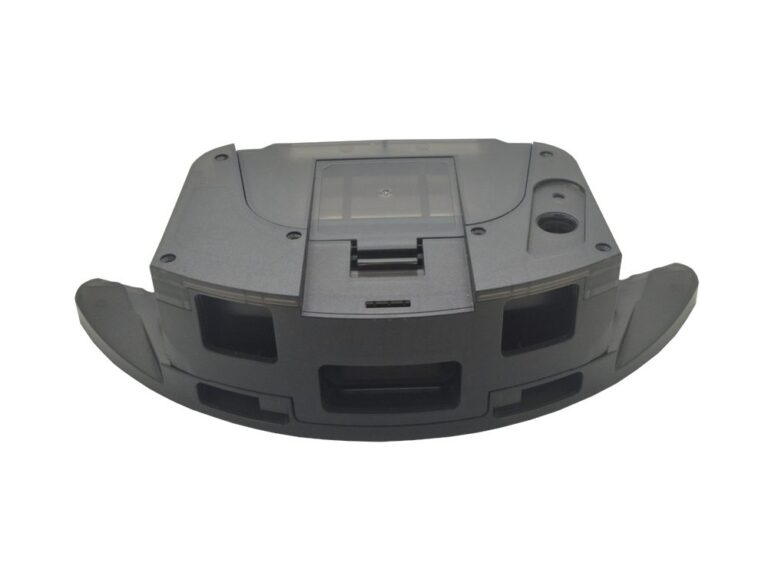
From a cost perspective, while the initial investment in custom molds may be higher, they prove to be more cost-effective in the long run for high-volume production. The initial expense is offset by lower per-unit costs when large numbers are produced, making custom molds the economical choice for setups aiming for mass production. Companies, therefore, often find that over time, these molds contribute to improved part consistency and reduced waste, further lowering production costs.
For more insights into the benefits of custom injection molds for plastic electronics enclosures, consider how these molds can adapt to evolving product requirements without compromising on quality.
Advantages of Off-the-Shelf Molds
When time is of the essence, off-the-shelf molds offer a compelling choice due to significantly faster lead times than custom molds.
With pre-designed templates readily available, manufacturers can swiftly start production without the prolonged design and approval phases required for custom options. This speed can be a game-changer if you encounter tight deadlines.
Cost is another critical factor where off-the-shelf molds shine, particularly in terms of initial investment and setup costs. Because these molds use standardized designs, they do not require costly design or tooling modifications, leading to lower upfront expenses. This financial efficiency is ideal for businesses with limited budgets or those that do not need highly specialized components.
Off-the-shelf molds also meet the needs of simple product designs and standardized parts, effectively offering sufficient functionality for such applications. They’re particularly suitable for electronics cases with straightforward geometries and standard sizes, eliminating the need for custom mold intricacies.
Additionally, choosing off-the-shelf molds reduces supplier dependency, as the molds are widely available and not tied to a specific vendor’s design limitations. This flexibility mitigates the risk of production delays or stoppages due to supplier issues and allows for easy switch-out between suppliers if needed.
Finally, the market offers off-the-shelf molds in a wide range of sizes and shapes, ensuring you can find a fit for most standard components. This breadth of selection further highlights their utility for applications where extreme customization isn’t necessary.”
Custom vs Off-the-Shelf Molds: By the Numbers
When it comes to electronics cases, custom injection molds and off-the-shelf molds stand apart on several quantitative fronts.
Lead times show a stark contrast; while custom molds may take weeks to design and manufacture due to detailed specifications, off-the-shelf molds offer immediate availability. This difference makes off-the-shelf molds suitable for projects requiring rapid turnaround, although the longer lead time for custom molds can be mitigated through precise slot confirmation for production schedules without committing to specific timeframes prematurely.
The cost dynamics also differ significantly. Initially, custom molds necessitate a higher upfront investment due to their tailored design and manufacturing processes. However, in high-volume productions, they often prove more cost-effective over time, as the per-unit cost decreases with larger runs. In contrast, off-the-shelf molds have lower initial costs but can become more expensive per part in larger volumes due to the lack of economies of scale.
In performance terms, custom molds lead in achieving higher accuracy and precision, critical for maintaining tight tolerances in electronic components. Off-the-shelf molds typically offer limited customization, which might impact the fit and finish of the resulting parts.
Custom molds cater to complex assemblies and significant production runs, often exceeding 100,000 units, whereas off-the-shelf molds are ideal for smaller, standardized production volumes due to their quick deployment and reduced costs.
Material flexibility is another area where custom molds excel, enabling the use of specialized or high-performance plastics that off-the-shelf molds might not support.
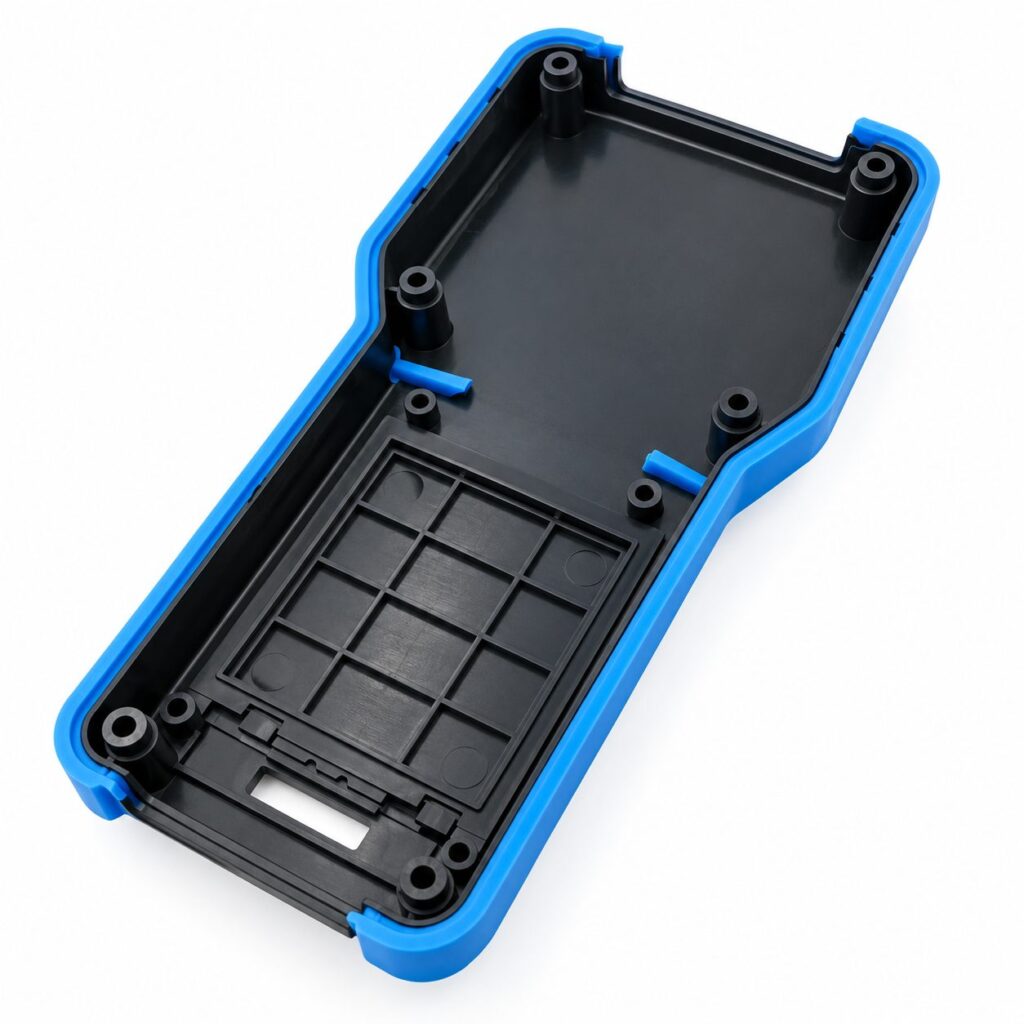
Comparison of Custom vs Off-the-Shelf Molds
| Aspect | Custom Molds | Off-the-Shelf Molds |
|---|---|---|
| Lead Time | Weeks, dependent on design complexity | Immediate availability |
| Initial Cost | Higher | Lower |
| Long-Term Cost | Lower per unit at high volumes | Higher per unit in large volumes |
| Part Precision | High | Moderate |
| Production Volume | Ideal for >100,000 units | Suitable for smaller runs |
| Material Flexibility | High | Limited |
Ultimately, choose custom molds for high-volume, high-precision needs, and off-the-shelf molds for rapid, short-run projects with constrained budgets.
When to Choose Custom Molds
Custom molds serve a pivotal role in applications demanding high precision or unique design specifications, particularly within the tech industries.
These molds allow for precise control over dimensions and tolerances, essential for electronic components that must fit and function seamlessly in complex assemblies. For instance, in high-volume electronics production, a custom mold ensures consistent part quality, reducing the risk of defects and costly reworks over large runs. This precision is crucial for maintaining the integrity of products where minutes dimensions can influence performance.
For specialized applications, such as in 3D molded electronics, custom molds provide unparalleled adaptability to cater to specific material characteristics and production requirements. This adaptability extends to the use of advanced materials and finishes, making it possible to create parts that meet stringent industry standards, such as those needed for waterproofing or thermal management in electronic cases. Moreover, the ability to incorporate unique features directly into the mold can significantly elevate product functionality, setting a product apart in a crowded market.
In terms of branding and aesthetic uniqueness, custom molds excel by allowing intricate, personalized designs that align with brand identity. They enable the production of aesthetically distinctive casings that can differentiate products strongly in the marketplace. This differentiation is not merely cosmetic; it reflects a deeper level of product identity and branding, which can be a decisive factor in consumer choice.
Additionally, when manufacturing at high volumes, the investment in custom molds becomes economically justifiable. While the initial costs are higher, the long-term savings in reduced unit costs and decreased production inefficiencies make them cost-effective for large-scale operations. This is particularly relevant when considering the lifetime value of the mold over multiple product cycles, which spreads the initial costs across a wider production base. More insights can be found in our Custom Injection Molds for 3D Molded Electronics resource.
When to Opt for Off-the-Shelf Molds
Opting for off-the-shelf molds is a pragmatic choice for those with urgent time-to-market pressures.
These molds offer rapid deployment, aligning well with projects facing short lead times or tight deadlines. This speed stems from their pre-designed nature, bypassing lengthy development cycles typical of custom molds. For electronics cases that adhere to standard design parameters, the swift availability can be particularly advantageous.
Budget constraints also play a crucial role in the decision to use off-the-shelf molds. Their initial investment and setup costs are substantially lower compared to custom mold solutions. This cost-efficiency makes them an ideal choice for startups or companies with limited financial resources. It allows them to allocate resources to other vital areas of product development and marketing without compromising on mold quality.
For standardized product designs, off-the-shelf molds provide a satisfactory solution without the need for intricate customization. Products that utilize common geometries or sizes benefit from this option as they do not require unique mold features or adaptations. This makes them suitable for products like basic electronics cases, where bespoke designs are unnecessary.
Low-volume production scenarios also favor off-the-shelf molds, where the economies of scale typically associated with custom molds are less critical. In such cases, the ability to quickly and affordably produce smaller quantities without heavy investment upfront is beneficial.
Finally, the reduced complexity in supply chain management is another merit. Off-the-shelf molds minimize the need for extensive supplier oversight and coordination, allowing businesses to focus on other core operational aspects. This simplified process can be a decisive factor for companies looking to streamline operations with minimal hassle.
Common Mistakes in Choosing Injection Molds
Choosing the wrong injection mold for electronics cases can lead to significant inefficiencies.
One frequent oversight is failing to evaluate long-term versus short-term cost benefits. While off-the-shelf molds often seem more economical upfront, they may not align with long-term production goals, particularly for high-volume runs where the economies of scale benefit custom molds. Custom molds, while initially more expensive, can reduce unit costs and enhance production efficiency over time.
Another critical mistake involves overlooking design complexity and potential changes. Custom molds accommodate intricate designs and anticipated alterations more effectively than off-the-shelf options, which are limited by their standard configurations. Ignoring this can lead to costly redesigns or compromises on product aesthetics and functionality.
Additionally, many underestimate the importance of material compatibility and quality. Each mold type has different material integrations, impacting part performance and quality. Custom molds offer tailored material options that can meet specific thermal, mechanical, and durability requirements, whereas off-the-shelf molds have predefined material compatibilities, which may restrict optimal performance.
Buyers also often neglect the potential for production volume changes. Custom molds are an investment that supports scalable production without frequent changes, while off-the-shelf molds might not adapt well to increased volumes, incurring additional costs when scale-up is needed.
Finally, relying solely on cost without considering performance can be detrimental. Focusing just on initial mold cost can overlook vital performance metrics, such as precision, durability, and finish quality, all of which impact the final product’s reliability and appeal.
Making the Right Mold Choice for Your Electronics Case
Selecting the appropriate mold for your electronics case involves a careful balance between immediate needs and long-term goals.
Custom molds offer tailored solutions for complex designs, ideal for high-volume production, while off-the-shelf molds provide cost-effective solutions for standard designs with shorter lead times. Your choice will greatly impact manufacturing efficiency and product performance. When choosing a supplier, ensure they can assist in navigating these options effectively and are capable of delivering molds aligned with your specific requirements.
Frequently asked questions
What are the typical lead times for custom and off-the-shelf molds?
Custom molds can require longer lead times since they are often built to specific designs. It is advisable to ask your supplier for their lead time estimates based on their current production capacity.
Can custom molds accommodate changes in design after initial production?
Consider discussing potential design changes with your supplier before finalizing the mold design. It’s important to note that significant changes after production begins may lead to increased costs and extended lead times.
Are off-the-shelf molds suitable for high-performance electronic devices?
For applications with specific engineering requirements or precise specifications, discussing with suppliers whether custom molds offer the flexibility needed can be beneficial. This approach helps ensure the mold aligns with your project’s unique needs.
Request a project review
Send the 3D model, 2D drawing, material requirements, annual volume and critical dimensions. The team will identify open technical questions before tooling is quoted.