
In-house development support
Rapid Prototyping Services
Validate appearance, fit and function with in-house plastic and metal prototyping. We help you select the right process before committing to production tooling.
A useful prototype answers a defined engineering question. Whether you are assessing a new enclosure, checking mating parts or preparing a functional demonstration, YIOT reviews the purpose of the sample before recommending a manufacturing route. We connect early development with the decisions needed for tooling and production.
Request a Prototype Quote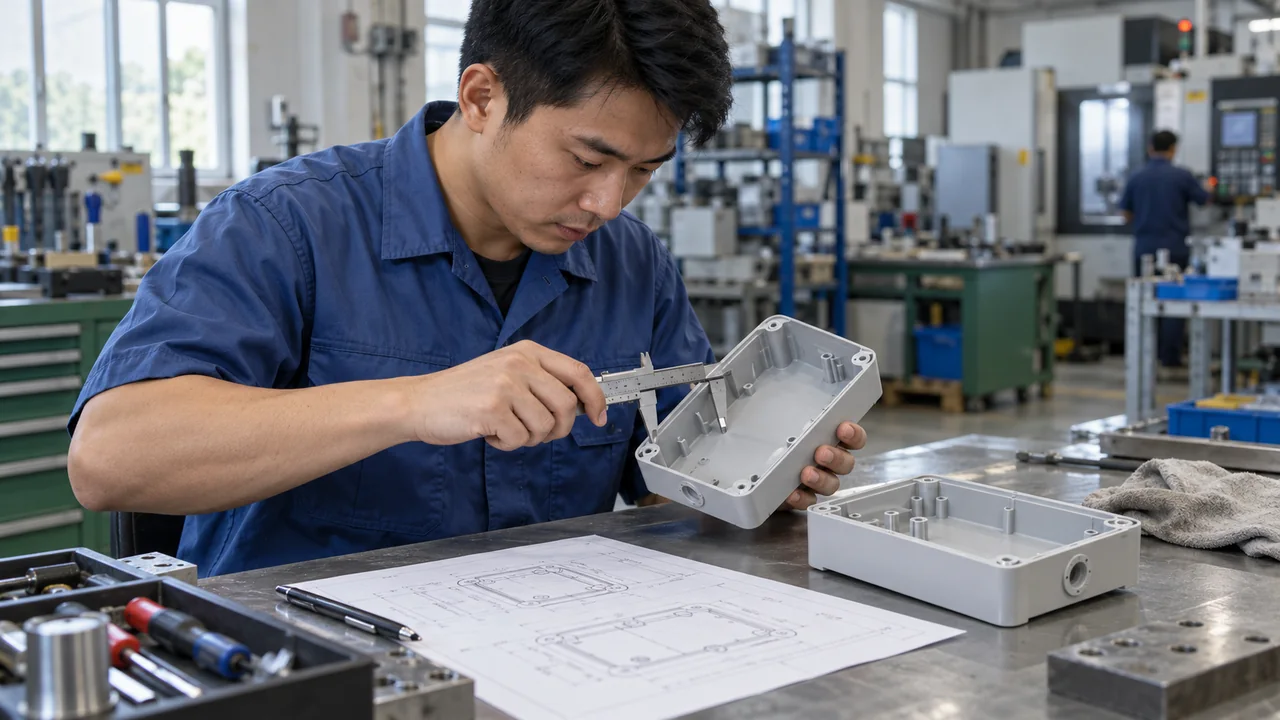
Start with the decision
What Should Your Prototype Validate?
Define what the team needs to learn and which features must represent the intended product. One sample may support several checks, but those checks can require different materials, accuracy and finishing.
Appearance
Review proportions, grip, visibility and the relationship between surfaces. Specify any color, texture or gloss that matters to the review. An appearance model may need cosmetic treatment without needing every internal feature.
Fit
Check clearances, locating features and interfaces with purchased components. Identify the dimensions that drive fit so inspection focuses on the features that determine whether parts seat and align correctly.
Assembly
Confirm access for fasteners, installation sequence and the space needed for tools. Evaluate clips, bosses and connections in their intended context, including the parts that are installed before and after them.
Function
Describe loads, movement, temperature and the planned test. The sample route must support the relevant behavior, and the review should distinguish demonstrated results from questions still requiring production material or molded parts.
Process selection
Choose Your Prototyping Process
We compare the proposed material, geometry, finish and likely design changes. Tooling investment is another factor. The right route depends on what you need to verify, rather than on a single preferred process.
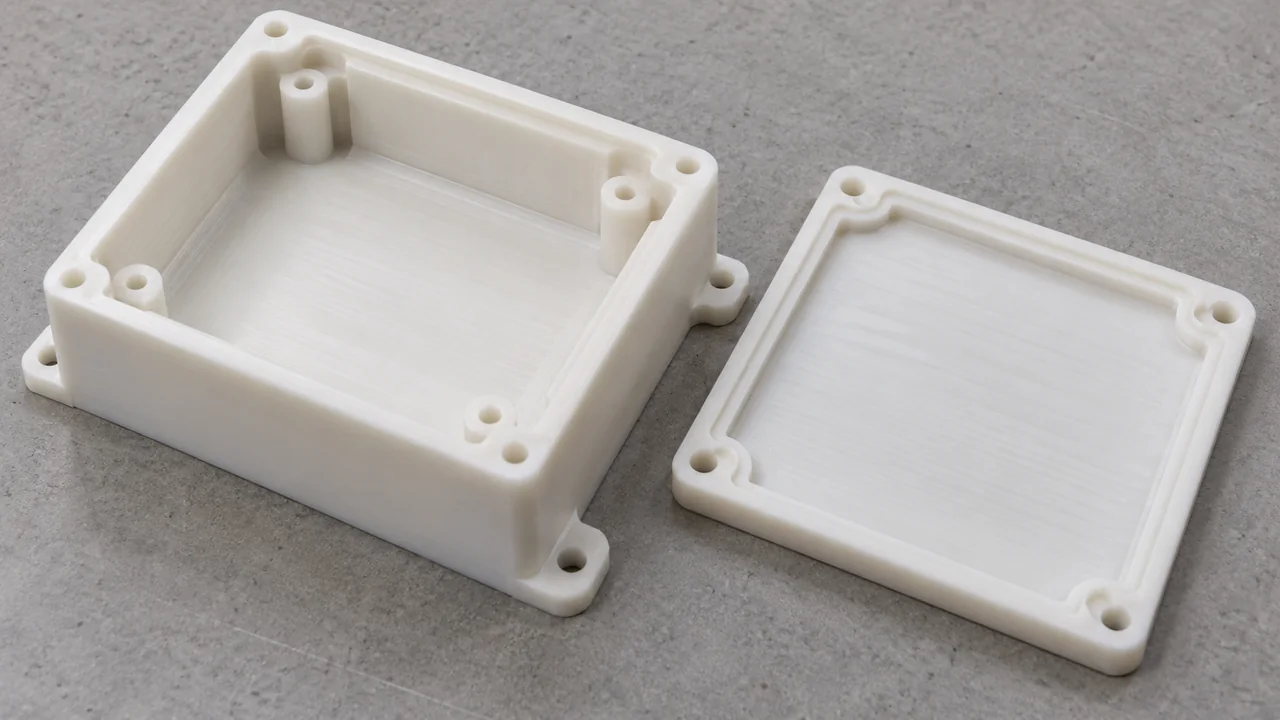
CNC machining
Machined samples are useful when stock material, defined interfaces or functional dimensions are central to the review. Cutter access, internal radii and workholding affect the geometry. Material selection and finishing are agreed against the purpose of the sample.
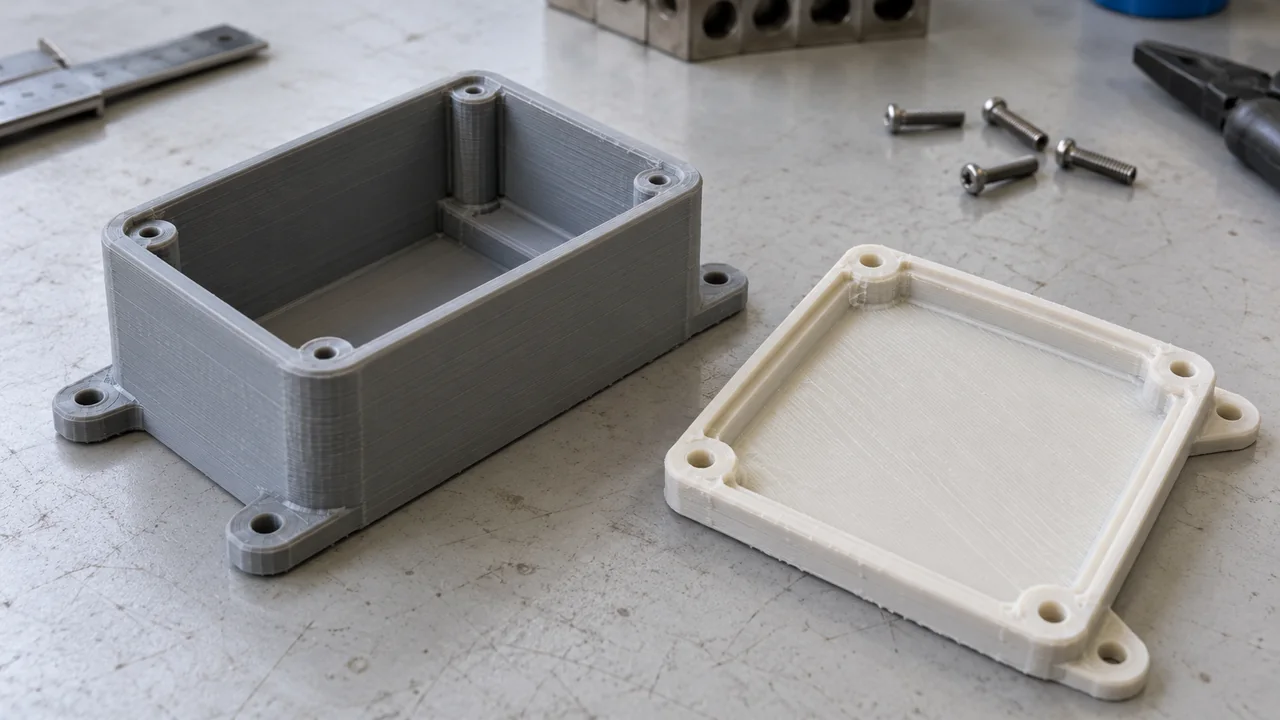
3D printing
Printed samples can help explore complex shapes and make iterative changes without cutting a mold. The printing route, build orientation and material influence surface quality and behavior. We clarify where support removal or additional finishing affects the review.
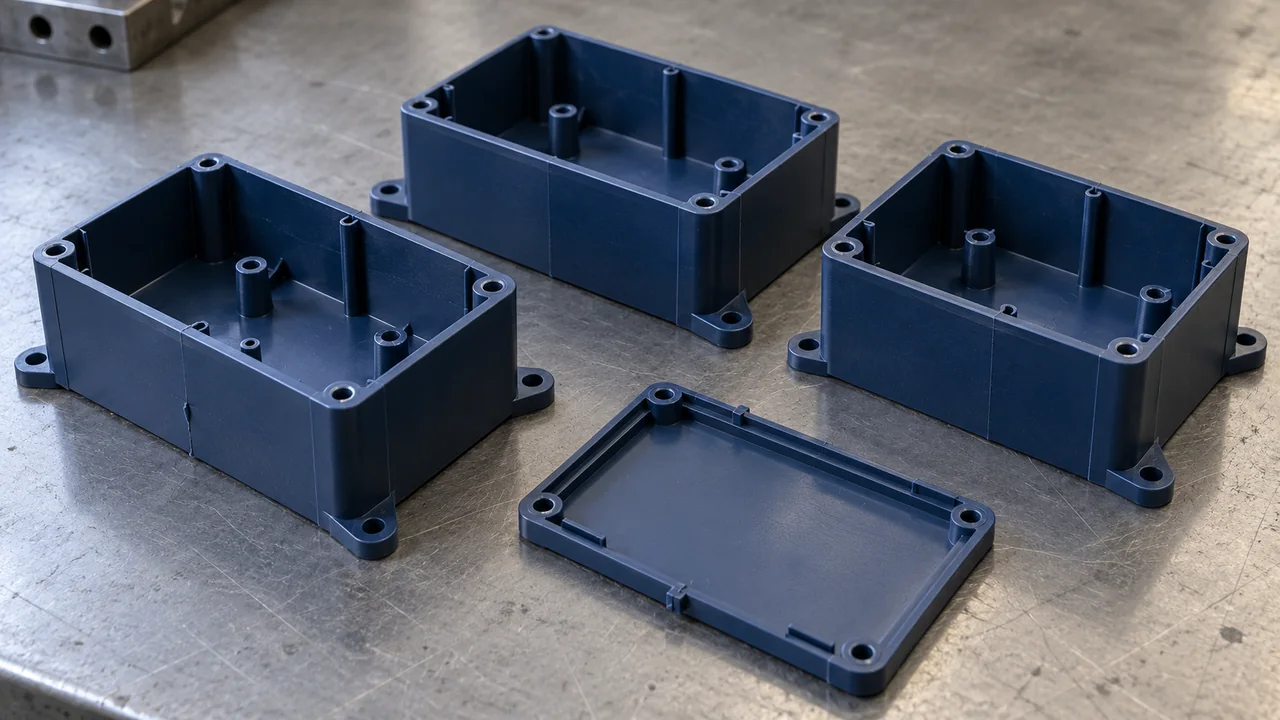
Prototype injection molding
Prototype molding is considered when evaluation needs molded material and process behavior. It introduces tooling decisions and a trial stage. Features, resin, quantity and expected revisions should be reviewed before choosing the tool approach.
| Decision | What to establish |
|---|---|
| Material | Required resin or metal grade, and which properties the sample must represent. |
| Geometry | Critical interfaces, inaccessible features, wall sections and internal detail. |
| Finish | Appearance reference and whether cosmetic treatment could affect fit. |
| Change and tooling | Likely revisions, sample quantity and whether investing in a mold supports the next decision. |
Use evidence carefully
Material Representation Matters
Not all printed materials are equivalent to the intended production resin. A printing process may use a photopolymer or a thermoplastic, with properties influenced by processing and orientation. A visual match alone does not establish equivalent impact, heat, fatigue or chemical resistance.
Machining a thermoplastic can provide useful checks in a selected stock grade, but it does not reproduce injection molding shrinkage, flow effects or directional behavior. A prototype result should therefore be interpreted against its manufacturing route. Tell us which performance questions matter so we can discuss what the sample can demonstrate and what needs a later molding trial.
If the proposed prototype uses a substitute material, document that choice with the evaluation plan. It may be suitable for checking access or proportions while leaving other properties unresolved. Separate those observations in your review record so a successful fit check is not mistaken for evidence about long-term performance.
For tests involving heat, fluids or repeated loading, share the conditions and expected duration. We can then discuss whether the selected sample route is appropriate and which aspects require further validation with production-intent material and processing.
Check the interfaces
Check the Assembly Before Tooling
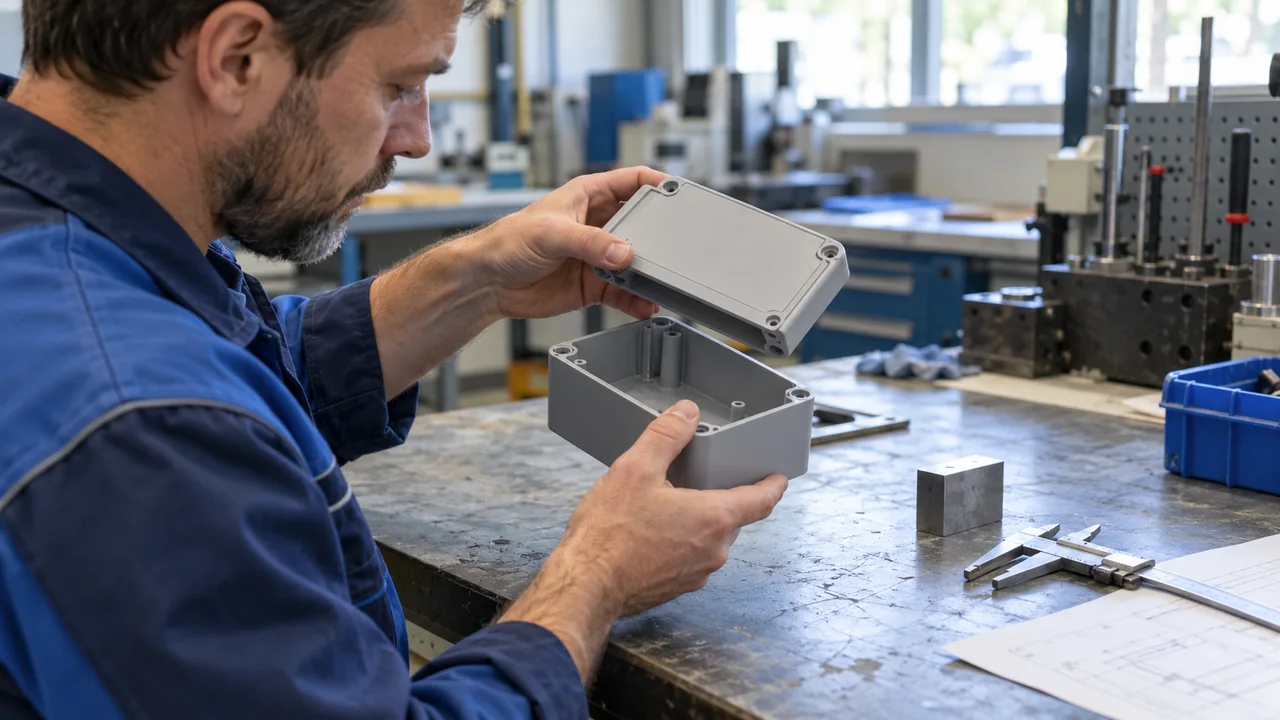
Bring mating parts into the review early. A housing that looks correct in isolation can still create interference at a locating feature, leave inadequate clearance or make a fastener difficult to install. Share the assembly model and identify reference surfaces, connector positions and service access.
We can review an assembled sample against the agreed checks and record observations for your design team. Include finishing and assembly requirements when appearance or joining affects validation. The illustrated enclosure highlights typical interfaces to examine; its geometry is an example, not a supplied product design.
A practical review sequence
From First Samples to Design Approval
Share the inputs
Send current CAD, drawings, quantity and the purpose of the prototype.
Agree the route
Confirm material, process, appearance expectations and critical inspection features.
Produce samples
Manufacture against the agreed revision and identify any approved deviations.
Check the result
Review appearance, fit, assembly and the defined functional checks.
Resolve revisions
Record changes and confirm the design revision for the next development stage.
Plan the next stage
Move from Prototype to Production
Sample approval is one development milestone. It does not replace tooling validation or approval of repeat production. After the prototype review, we can connect your design with DFM analysis, rapid tooling and injection molding. Each stage has its own manufacturing checks and agreed acceptance criteria.
Before moving forward, consolidate sample observations into one controlled design update. Identify accepted features, open issues and any changes to the material or assembly. This gives the tooling review a clear starting point and helps avoid carrying an unresolved prototype assumption into the mold design.
The handover should also establish who approves the next samples and what evidence they need. A shared acceptance plan makes later trial results easier to assess and keeps the development team aligned on the remaining work.
Rapid Prototyping FAQ
What should I send for a prototype quotation?
Provide CAD, available drawings, quantity, preferred material and the questions the sample must answer. Add mating component information and appearance references when those affect the review.
How do you choose the prototyping process?
We review material representation, geometry, critical dimensions, finish, quantity and likely revisions. The proposed route should support your evaluation and the next development decision.
Can the prototype use my production material?
Sometimes, depending on the grade and route. We confirm suitability during review and explain material or processing differences that could limit the meaning of a test.
Can we revise the design after the first sample?
Yes. Send a controlled revision and identify the changes. We review the effect on manufacturing, existing tooling where applicable, cost and the next sample schedule.
How long does prototyping take?
A quotation is available within 24 hours when inputs are complete. Manufacturing and validation timing is confirmed per project after reviewing process, material, quantity, finishing and test requirements.
Is an NDA available?
Yes. An NDA is available for confidential development work. Let us know before sharing sensitive files so the required confidentiality arrangements can be established.
Prepare your prototype review
Tell Us What the Sample Must Prove
Send your files, sample quantity, material preference and acceptance checks. Include the intended development deadline so we can review a suitable route and confirm project timing. Complete inputs help us prepare your quotation within 24 hours.
Request a Prototype Quote