Recently, when facing challenges with dimensional accuracy requirements that led to parts not fitting correctly or performing well in high-speed conditions, a procurement team might consider evaluating potential suppliers for their ability to deliver precision molds. Subpar components risk customer dissatisfaction and potential recalls, emphasizing the need for a reliable partner to meet demanding applications. At Yiot Technology Co., Ltd., we focus on employing advanced CNC machining, supported by a quality management system certified to ISO 9001:2015 standards. Designing solutions is part of our service, ensuring precision molds that meet every specification.
Key takeaways
- Dimensional accuracy is pivotal in ensuring that drone components fit seamlessly within their assemblies, a challenge that the client faced head-on with complaints about inconsistent component fit.
- Mold inaccuracy can have a profound impact on the assembly of drone components, primarily when these irregularities cause misalignment or poor fit.
- Yiot Technology Co., Ltd. has implemented a series of process improvement steps to ensure the highest quality in custom injection molds for plastic drone components.
- By employing advanced precision practices, Yiot Technology Co., Ltd.’s production molds are crafted with precision to meet tight tolerances—a pivotal factor for any client involved in drone component manufacturing.
- Selecting a capable and certified mold supplier is critical to the success of manufacturing custom injection molds for drone components.
The Challenge: Dimensional Accuracy Issues
Dimensional accuracy is pivotal in ensuring that drone components fit seamlessly within their assemblies, a challenge that the client faced head-on with complaints about inconsistent component fit.
The issue stemmed from discrepancies in the mold dimensions, leading to components that either fell short of or exceeded their specified tolerances. Upon detailed analysis, it became evident that the tolerances of the current supplier’s molds did not align with the established standards for precision in this high-stakes industry.
Comparison of Dimensional Tolerances
| Specification | Current Supplier | Industry Standard |
|---|---|---|
| General Tolerance | ±0.1 mm | ±0.05 mm |
| Hole Diameter | ±0.12 mm | ±0.1 mm |
| Part Alignment | ±0.15 mm | ±0.1 mm |
| Surface Flatness | ±0.2 mm | ±0.1 mm |
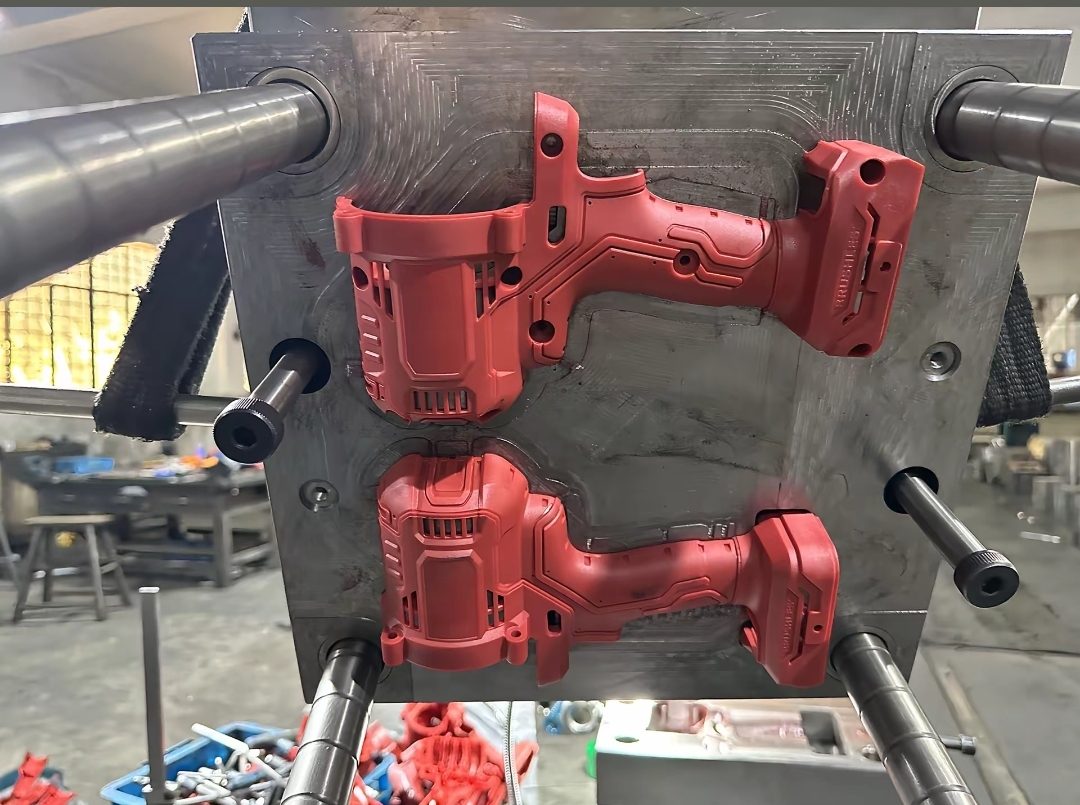
The analysis revealed that discrepancies greater than ±0.1 mm were regularly observed in critical dimensions, leading to parts that misaligned when assembled. This deviation not only interfered with the swift assembly of drone components but also had a marked negative impact on their operational performance. Customers reported increased vibration levels during drone operation, attributed directly to the misalignments in the assembled components.
Not surprisingly, customer feedback reflected dissatisfaction as the performance deviations became apparent. The client highlighted their urgent need for a reliable solution to prevent further loss of confidence from end-users, as well as the associated financial implications of potential returns and rework costs.
Correcting these issues was not just about meeting the baseline standards, which require a tight tolerance control often at ±0.05 mm for precise plastic components. It was about restoring trust and ensuring product reliability in market applications where failure could jeopardise not only functional efficiency but also customer loyalty. Consequently, the client required a solution to eliminate those inconsistencies and establish a manufacturing process that could deliver parts with an accuracy meeting or exceeding industry expectations.
Consequences of Mold Inaccuracy
Mold inaccuracy can have a profound impact on the assembly of drone components, primarily when these irregularities cause misalignment or poor fit.
A poorly fitting component can disrupt the aerodynamic properties and structural integrity of drones, making assembly cumbersome and error-prone. For instance, when a drone housing isn’t perfectly aligned due to mold inaccuracies, it can lead to gaps or stress points, compromising its ability to fly smoothly and respond accurately to control inputs.
Rework caused by mold inaccuracy greatly extends manufacturing lead times. Correcting precision issues necessitates additional cycles of mold adjustments, trial runs, and inspections. Each iteration can significantly delay the production schedule. In a competitive market, where time to market is crucial, these delays can translate to lost opportunities and client dissatisfaction. Additionally, the Custom Injection Molds for Plastic Drone Components need to be consistently accurate to avoid any such production setbacks.
Financially, inaccuracies lead to heightened costs due to waste and rework. In the worst-case scenario, faulty parts reach customers, resulting in returns or warranty claims. These reversals not only squeeze profit margins but can also incur additional logistics costs. Furthermore, significant returns can damage a brand’s reputation. Customers dissatisfied with inconsistent product quality may lose trust and turn to more reliable competitors. In markets driven by high competition and rapid innovation, maintaining a strong brand image is essential for customer retention and ongoing success.
Consistent quality in high-speed applications is non-negotiable. Drones, especially those used for commercial or industrial purposes, often operate in demanding conditions where precision and reliability are paramount. Any defect resulting from mold inaccuracies can lead to performance degradation or even total equipment failure in these high-stakes environments. Therefore, achieving consistent precision in molding isn’t just a technical requisite—it is critical for sustaining operational reliability and customer loyalty.
Process Improvement Steps by Yiot Technology
Yiot Technology Co., Ltd. has implemented a series of process improvement steps to ensure the highest quality in custom injection molds for plastic drone components.
These steps start with adopting Design for Manufacturability (DFM) analysis, refining mold designs based on client specifications and production capabilities. This analysis allows our engineers to anticipate potential design issues before production begins, optimizing material flow and preventing common defects such as warpage or sink marks. By considering manufacturability early, we improve reliability and reduce lead times significantly.
The introduction of CNC machining plays a pivotal role in enhancing the precision of drone components. CNC machinery allows us to achieve exceptional tolerances, crucial for complex drone parts where precision is key. This meticulous process not only ensures the dimensional accuracy required for drone applications but also cuts the production cycle time, supporting a more efficient manufacturing workflow.
In line with ISO 9001:2015 quality control measures, Yiot Technology integrates these standards throughout the production process. Our commitment to maintaining strict quality assurance protocols, from initial design to final inspection, reflects in every mold we produce. We conduct regular inspections and adjustments during production runs to ensure that molds maintain their integrity and performance, responding dynamically to any deviations that may arise.
Moreover, we take pride in actively collaborating with our clients, incorporating their feedback into the mold design and production process. This ongoing dialogue allows us to fine-tune products to meet exact customer needs, ensuring that the final components not only meet but exceed expectations.
Another essential aspect of our process is the regular inspection and timely adjustment of molds. Our team remains vigilant throughout the production process, employing precise measurement tools and techniques to catch any inconsistencies early. This proactive approach minimizes the risk of defects reaching our clients and guarantees a consistent, high-quality output every time.
These steps collectively enable Yiot Technology to consistently deliver on stringent product requirements, as demonstrated in our work with Custom Injection Molds for Plastic Automotive Lighting Components. Through continuous improvement and client collaboration, we not only meet industry standards but also drive innovations in the production of plastic components for drones.
Outcome: Meeting the Demands
By employing advanced precision practices, Yiot Technology Co., Ltd.’s production molds are crafted with precision to meet tight tolerances—a pivotal factor for any client involved in drone component manufacturing.
The meticulously crafted molds were designed to adhere to stringent dimensional tolerances. Precise mold fabrication can lead to consistent quality across produced components.
The enhanced production techniques not only improved quality but also significantly reduced manufacturing cycle time and costs. Efficient workflows and optimized mold designs can reduce cycle time. This reduction enabled more rapid component turnover, which is essential for clients facing high demand in a competitive drone market. Moreover, the cost-savings achieved from this efficiency were passed on to the clients, making it a win-win situation.
A critical aspect was the enhanced product performance in high-speed conditions, which was achieved through superior mold accuracy and uniformity in component production. This reliability is indispensable for drone components, as performance consistency in high-speed flight is crucial. The improved aerodynamics and fit of the components significantly contributed to heightened drone efficiency and stability during such operations.
The positive outcomes fostered a strengthened relationship between YIOT and its clients. Consistent quality delivery and operational efficiency led to positive feedback from the clientele. Clients reported considerable reductions in assembly errors and noted a marked improvement in performance metrics after integrating YIOT’s components. Consequently, these results bolstered trust and established YIOT as a reliable partner in the drone industry.
Overall, the outcomes of this project highlight the commitment of Yiot Technology Co., Ltd., to exceed client expectations. Through precision-driven mold production aligned with ISO 9001:2015 standards and customer-focused practices, YIOT demonstrates the ability to meet high demands in the evolving landscape of drone technology.
Lessons for Future Projects
Selecting a capable and certified mold supplier is critical to the success of manufacturing custom injection molds for drone components.
A supplier’s certifications, such as ISO 9001:2015, offer an assurance of their quality management practices. Such credentials indicate a proven track record of delivering high-quality molds that align with rigorous industry standards. Collaborating with certified suppliers minimizes the risk of defects and ensures consistency, a factor crucial for intricate drone components that demand precision.
Regular communication with your mold supplier is equally important. The complexities inherent in mold design and production are best navigated through open and constant dialogue. This partnership facilitates timely updates on mold progress and promptly addresses issues as they arise, preventing costly delays. For instance, discussing adjustments during CNC machining or potential design modifications can significantly impact the quality and delivery timeline of the final product. Regular communications ensure that both parties are aligned and support a flexible approach to overcoming challenges.
Integrating advanced technology into mold design and production processes adds an invaluable layer of precision and efficiency. Utilizing technologies such as CAD/CAM software for design and CNC machining for manufacturing promotes accuracy in mold construction and reduces the likelihood of errors during production. This integration not only meets but often exceeds client expectations regarding mold performance in high-stress environments, such as those encountered by drone components.
Aligning with industry standards for quality assurance is non-negotiable. It is vital to adhere to or exceed these standards at every stage of the mold design and production process to guarantee that the final product performs optimally under operational conditions. Ensuring that the assembly of your components meets specific industry benchmarks safeguards against operational failures and enhances customer trust and satisfaction.
Lastly, establishing a feedback loop with the supplier is essential for enhancing production efficiency. Continuous feedback allows for ongoing improvements in mold design and manufacturing processes, leading to the refinement and optimization of production methods. This iterative process is instrumental in achieving shorter lead times and cost savings, vital in the competitive drone components market.
For more detailed considerations when selecting a supplier, refer to the importance of experience and capabilities highlighted in our guide on Custom Injection Molds for Plastic Automotive Interior Components. Such insights are directly applicable to ensuring success in future drone component projects.
Evaluating Your Mold Supplier Options
When considering a mold supplier, prioritize those with ISO 9001:2015 certification to ensure systemic quality management.
Experience in the drone industry is vital, as it provides a supplier with insight into unique requirements such as weight constraints and aerodynamic precision. Verify their process control methods, looking for consistent monitoring and feedback systems. Consider inquiring if a supplier offers capabilities such as CNC machining, EDM, and the ability to perform DFM analysis, as these are crucial for precision work. Finally, confirm that the supplier can align their expertise with the complexities of drone component needs, focusing on precision and material integrity.
Frequently asked questions
What is the typical lead time for producing custom molds for drone components?
The lead time for producing custom molds is not fixed and depends on the project’s specifics. To ensure clarity, it’s advisable for buyers to discuss timelines with their suppliers based on their unique project requirements.
What quality standards should a mold supplier meet for drone components?
A reliable mold supplier for drone components should be ISO 9001:2015 certified to ensure consistent quality management. This certification means the supplier adheres to internationally recognized standards for quality control and continuous improvement.
How does DFM analysis improve the mold design process?
DFM analysis helps optimize the design for manufacturability, identifying potential issues early. This leads to more efficient manufacturing, minimizes costs and material waste, and ensures the final product meets quality standards.
Request a project review
Send the 3D model, 2D drawing, material requirements, annual volume and critical dimensions. The team will identify open technical questions before tooling is quoted.