
Choosing between custom and off-the-shelf injection molds for automotive components often hinges on the specific needs of your project. Custom molds are typically the route for unique, highly specialized parts, offering precision in design and flexibility in production. However, they come with longer lead times and higher initial costs. On the other hand, off-the-shelf molds provide a quicker path to production, ideal for standardized parts or lower volume projects, but often at the cost of reduced customization and limited flexibility. Understanding your project’s volume, timeline, and complexity will guide you to the right decision, balancing cost against performance requirements.
Key takeaways
- Custom molds provide an opportunity to create highly specialized automotive components that meet unique design and performance requirements.
- Off-the-shelf molds present a viable option when seeking a quicker and less costly solution for plastic injection molding in the automotive industry.
- Navigating the choice between custom and off-the-shelf injection molds entails understanding the distinct cost structures, lead times, and performance impacts each option presents.
- The decision to opt for custom molds hinges on several critical factors aimed at achieving optimal performance and specifications for automotive components.
- Off-the-shelf injection molds are an ideal choice when production timelines are too constrained to accommodate the longer lead times of custom molds.
Custom Molds for Unique Specifications
Custom molds provide an opportunity to create highly specialized automotive components that meet unique design and performance requirements.
Unlike off-the-shelf molds, which cater to standard part dimensions, custom mold designs are tailor-made, ensuring that they perfectly match the intricate geometries and functional needs of specific components. For instance, custom molds can achieve tighter tolerances—often within ±0.001 inches or better—essential for parts that must integrate seamlessly within automotive systems.
However, this level of precision and customization does come at a cost. The upfront investment for custom molds is notably higher compared to standard options due to the complexity involved in designing and engineering bespoke components. The process often involves detailed design phases, prototypes, and several iterations to achieve the desired specifications. Such rigorous stages not only add to the expense but also extend the overall project timeline. Buyers should anticipate longer lead times as the custom mold moves through the design, prototyping, and manufacturing stages. This typically necessitates careful planning and scheduling to align with production roadmaps.
Despite the increased initial expenditure and longer timeline, custom molds deliver exceptional value in scenarios that demand exacting standards. Their ability to accommodate unique component features—be it specific reinforcing ribs, undercuts, or complex functional enhancements—makes them indispensable for advanced automotive applications. To ensure all requirements are thoroughly addressed, checking out resources like the RFQ Checklist for Custom Injection Molds for Plastic Automotive Components can help streamline the specification and sourcing process, mitigating potential pitfalls.
Consequently, custom molds represent a strategic investment for automotive manufacturers needing precision-engineered parts conforming to rigorous industry standards.
Advantages of Off-the-Shelf Molds
Off-the-shelf molds present a viable option when seeking a quicker and less costly solution for plastic injection molding in the automotive industry.
These molds offer a lower initial investment compared to custom alternatives, primarily because the design and manufacturing stages require less time and resources. Unlike custom molds, which demand a detailed specification development and engineering process, off-the-shelf molds can be purchased readily, saving valuable project capital and reducing financial risk at the start.
Faster Time-to-Market: One of the significant advantages of choosing off-the-shelf molds is the faster time-to-market they allow. This reduced timeline results from a minimized need for bespoke design processes and tooling modifications. Therefore, projects that are under tight deadlines or need rapid prototyping can greatly benefit from off-the-shelf solutions.
Appropriate for Standardized Components: For automotive components that do not demand unique features or complex geometries, off-the-shelf molds are often sufficient. They are ideally suited for parts with less critical performance requirements where precision and customization are not primary concerns. Particularly for standardized items, this option streamlines production, avoiding unnecessary complexity.
However, it’s crucial to acknowledge that off-the-shelf molds come with limited customization options. This potential drawback means that while they fulfill standard project requirements efficiently, they may fall short when specific design criteria or high-performance standards must be met. As such, they are not always suitable for components that require precision engineering or where proprietary technology is involved.
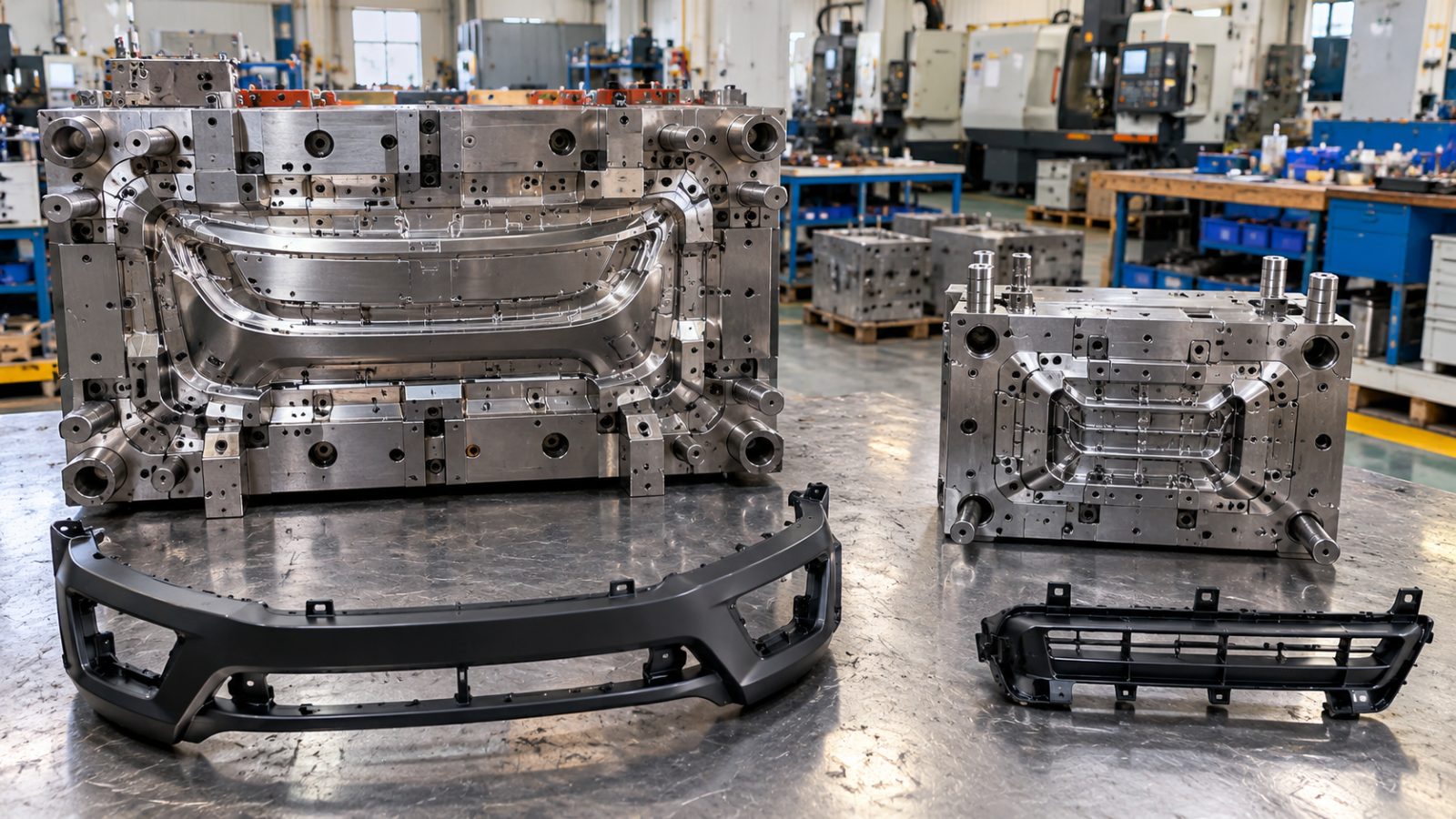
Custom vs. Off-the-Shelf: By the Numbers
Navigating the choice between custom and off-the-shelf injection molds entails understanding the distinct cost structures, lead times, and performance impacts each option presents.
Cost-wise, custom molds often incur higher initial expenses due to dedicated tooling design and manufacture but can become cost-effective at higher production volumes. In contrast, off-the-shelf molds offer lower upfront costs, suiting smaller runs and prototyping scenarios where flexibility and rapid deployment are vital.
Lead times for custom molds typically stretch over several weeks, encompassing design, prototyping, and adjustments. This duration is an essential factor when timelines are tight. Off-the-shelf molds, conversely, provide an advantage in speed, with immediate acquisition achievable, provided the mold specifications fit the component needs.
From a performance perspective, custom molds allow for greater precision and alignment with unique design requirements, often enhancing the part’s end-use applications by achieving tighter tolerances and less variability in production quality. Maintenance and longevity considerations also differ between the two: while custom molds generally require more intensive maintenance due to their intricate designs, their bespoke nature often results in a longer operational lifespan, especially in consistent production environments.
Comparison of Custom and Off-the-Shelf Injection Molds
| Feature | Custom Molds | Off-the-Shelf Molds |
|---|---|---|
| Cost (Initial Investment) | Higher | Lower |
| Production Volume | Cost-efficient at high volumes | Suited for small quantities |
| Lead Time | Longer | Shorter |
| Performance | High precision | Standard precision |
| Maintenance | Higher | Lower maintenance needs |
| Lifespan | Longer in consistent use | Shorter lifecycle |
Choosing the right mold type significantly depends on your specific production requirements, with each option offering unique benefits and constraints.
When to Choose Custom Molds
The decision to opt for custom molds hinges on several critical factors aimed at achieving optimal performance and specifications for automotive components.
For designs with intricate geometries, custom molds offer significant advantages. These specialized molds are engineered to accommodate complex features and unique shapes, which are often beyond the capabilities of standard options. This attention to detail ensures that each part closely aligns with the intended design, maintaining fidelity to the engineering blueprint.
High-performance requirements are another scenario where custom molds become indispensable. Automotive components frequently endure rigorous conditions—extreme temperatures, mechanical stress, and exposure to harsh chemicals—that demand precision manufacturing. Custom molds facilitate tight tolerances and exacting specifications, essential for parts that must function reliably under these demanding conditions. This level of precision in manufacturing ensures components perform as intended, contributing to vehicle safety and efficiency.
Additionally, while the initial investment for custom molds is higher compared to off-the-shelf options, this cost can be justified with high production volumes. Over significant volumes, the per-unit cost decreases, making the overall expense more manageable. Furthermore, custom molds offer potential for long-term cost savings. The durability and extended lifespan of these molds mean less frequent replacements, reducing downtime and maintenance costs.
For projects where specialized parts and robust performance standards are critical, custom molds represent a strategic investment. They align well with high-volume production settings where the benefits of precision and tailored design outweigh the initial financial outlay. Explore further details of Custom Injection Molds for Plastic Automotive Components to understand their impact on automotive manufacturing.
When to Opt for Off-the-Shelf Molds
Off-the-shelf injection molds are an ideal choice when production timelines are too constrained to accommodate the longer lead times of custom molds.
With custom molds, the process typically involves detailed engineering, tooling fabrication, and prototype validation, each potentially adding weeks to the schedule. In contrast, off-the-shelf molds are ready-made, eliminating most of these delays, which makes them appealing for projects where speed is essential.
Budget constraints can also make off-the-shelf molds the preferable option. Custom molds require a significant upfront investment due to their specialized design and fabrication needs. For operations focused on minimizing initial expenditure, particularly when working with limited budgets or projects forecasted for shorter production runs, the cost benefits of standard molds become evident. This financial advantage can be critical in projects like early-stage startups or prototype testing where funds are tight and future adjustments are anticipated.
Furthermore, when a project’s design requirements align well with existing mold configurations, choosing off-the-shelf molds is logical. Many standardized molds cover commonly needed shapes and functionalities, providing adequate component quality without the expenses associated with custom tooling. This makes them an efficient choice for prototypes, short runs, or when the design compliance of the mold closely aligns with necessary specifications.
Lastly, off-the-shelf molds are effective when working with parts that will likely see short or limited production runs. The investment in custom mold design and construction is hard to justify unless the production volume is substantial enough to recoup those initial costs. Thus, for projects with simpler components or shorter lifecycles, opting for a standard mold design can provide significant economic benefits.
Common Mistakes in Mold Selection
Choosing the right mold is crucial for automotive component production, yet several common errors can lead to costly missteps.
One prevalent mistake is overestimating the need for customization. Many companies opt for custom molds without fully assessing whether off-the-shelf options can meet their production requirements. This decision can inflate costs unnecessarily, especially for parts not requiring high specialization.
Conversely, there is a tendency to underestimate the long-term cost benefits that custom molds can offer, particularly in high-volume productions. While custom molds require a higher upfront investment, they often lead to significant savings over time through improved efficiency and reduced defect rates.
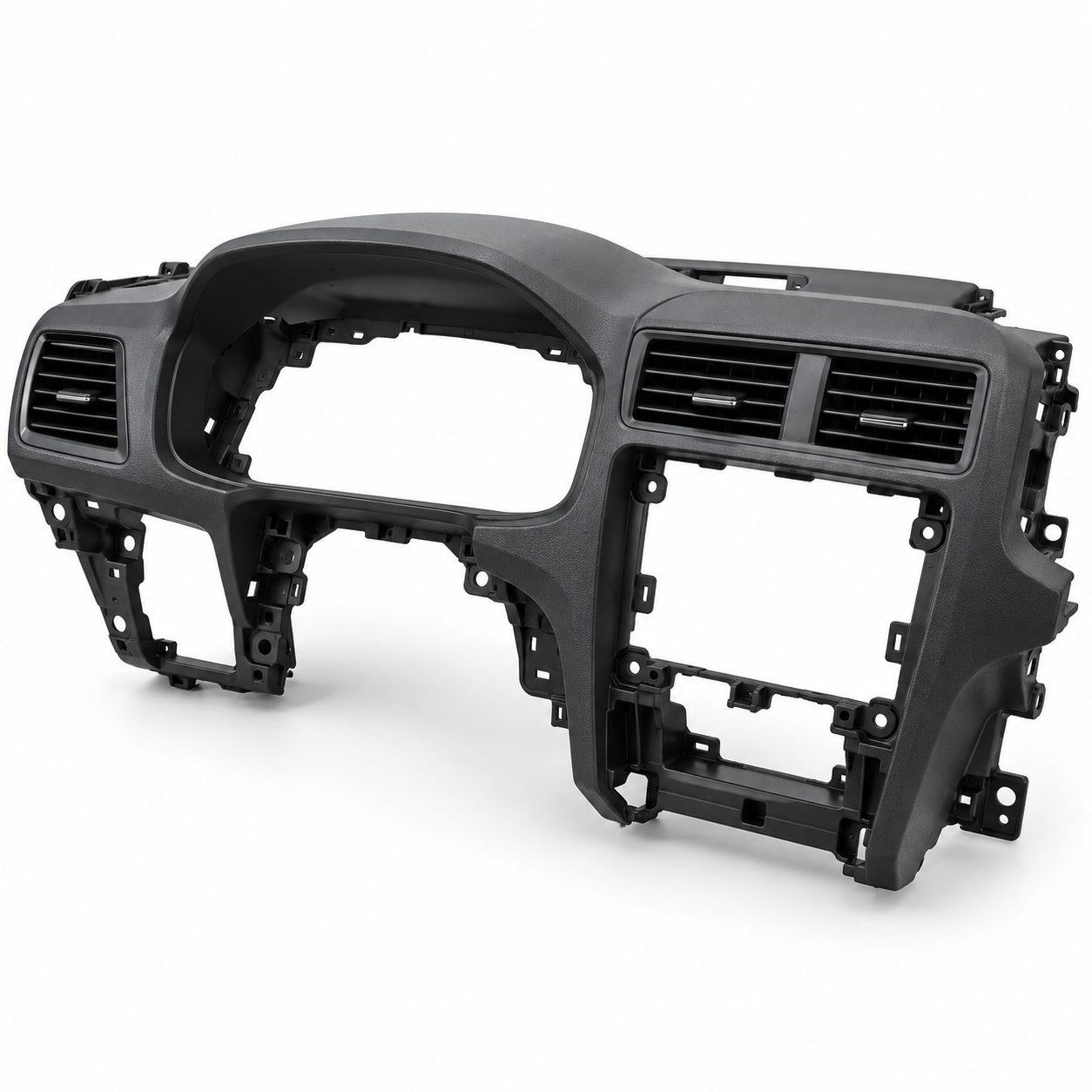
Ignoring lead time implications is another costly error. Custom mold development typically takes longer due to the intricate design and prototyping stages. Misaligning project timelines by not accounting for this extended lead time can delay product deliveries and disrupt market entry plans.
Finally, failing to evaluate performance requirements against the capabilities of the chosen mold can compromise component quality. Without a thorough analysis of performance needs, such as material compatibility and durability under specific conditions, firms may select molds that fall short, leading to inferior parts and potential recalls.
Avoiding these pitfalls by accurately assessing needs, aligning timelines, and evaluating performance requirements can lead to more strategic mold selections.
Deciding the Best Fit for Your Project
Selecting an injection mold that aligns with your automotive project’s needs involves evaluating several critical factors, including production volume, scheduling, and financial constraints.
For projects requiring high-precision, custom-engineered molds are ideal as they are designed to meet specific size and performance criteria. In contrast, standard molds are more advantageous for projects prioritizing speed and standardized dimensions.
In practical scenarios, custom molds become essential when a project necessitates distinctive component shapes or stringent tolerances—attributes that are pivotal in demanding applications such as internal engine components or sophisticated dashboard configurations. Conversely, generic molds are more effective in situations where part specifications are less demanding and the urgency of project completion is a significant factor, like in the production of interior trim supports or basic casing parts.
Your ultimate decision whether to opt for custom or generic molds should primarily reflect your project’s key priorities. If minimizing initial costs and achieving a swift rollout is your focus, generic molds can be a sensible solution. On the other hand, if achieving exact specifications and superior fit is crucial, and you can accommodate extended timelines, investing in Custom Injection Molds vs. Off-the-Shelf Molds might deliver long-term benefits.
Analyzing the convergence of these aspects will illuminate your decision path, ensuring the mold selection aligns effectively with your project’s distinct requirements.
Frequently asked questions
Determining the right mold type—custom or off-the-shelf—for automotive parts hinges on factors like project volume, design complexity, and time constraints. Custom molds excel when unique specifications and higher precision are essential, while off-the-shelf molds suit projects needing faster delivery and lower costs. Align your decision with the specific needs and constraints of your project, understanding the trade-offs each option presents to ensure product and budget alignment.
Frequently asked questions
What factors should I consider when deciding between custom and off-the-shelf molds?
Consider your project’s volume, complexity, and budget. Custom molds provide flexibility and precision, ideal for high volumes and specialized designs. Off-the-shelf molds offer cost and time savings for standardized needs.
How does lead time differ between custom and off-the-shelf molds?
Custom molds usually have longer lead times due to the design and prototyping stages. Off-the-shelf molds are often available more quickly, making them suitable for projects with tight timelines.
Can off-the-shelf molds be modified to suit specific needs?
Yes, to some extent, off-the-shelf molds can be modified, but there are limitations in achieving specific functionalities and precision compared to fully custom molds.
Request a project review
Send the 3D model, 2D drawing, material requirements, annual volume and critical dimensions. The team will identify open technical questions before tooling is quoted.