
A custom injection mold can significantly cut costs for silicone parts by improving efficiency across every production step. By tailoring each mold to your design and material specifications, waste is minimized and cycle times are reduced. This not only lowers material costs but also enhances the scalability of production. Yiot Technology Co., Ltd., ISO 9001:2015 certified, specializes in custom molds designed to exact customer specifications. Consequently, you gain cost efficiency without sacrificing quality, making this a smart investment for any manufacturer of silicone parts. Evaluating every step from initial material input to final inspection ensures long-term savings and high-quality outputs. Understanding this process from start to finish can provide essential insights into how custom molds serve as both a cost-effective and a reliable choice for silicone part production.
Key takeaways
- Selecting the right silicone material is a critical starting point in cost-effective mold design.
- In high-volume production of silicone parts, the initial mold design is the cornerstone upon which cost efficiency is built.
- The precision silicone injection molding process is comprised of several critical steps that directly impact both cost-efficiency and part quality.
- Process failures in silicone injection molding can significantly affect both production costs and time-to-market.
- Quality control is critical when manufacturing silicone parts, due to their demanding end-use applications.
1. Defining Input Materials and Specifications
Selecting the right silicone material is a critical starting point in cost-effective mold design.
Each application demands specific properties that influence material choice, and silicone’s versatility allows for customized solutions. For instance, high elasticity is crucial for parts like seals and gaskets, ensuring they can withstand repeated deformation. Thermal stability is another key property, particularly for components exposed to varying temperatures, such as in automotive and electronics applications.
When defining materials, it’s also essential to consider design complexities such as undercuts or intricate geometries. These elements can significantly impact mold design and the demolding process. Precision is crucial here, as molds need to accommodate these features without compromising the structural integrity of the final part. For instance, accommodating intricate features may require specialized mold components or enhanced levels of precision in CNC machining.
Incorporating Custom Injection Molds for Silicone Parts, industry standards ensure consistent quality management, while customer-specific requirements guide the detailed aspects of mold and part design, ensuring each element meets the intended use-case.
Choosing the right silicone grade can become particularly challenging under extreme environmental conditions. High-temperature environments or those with exposure to harsh chemicals demand materials with superior resilience—factors that must be weighed during the selection process to prevent part failure and ensure longevity.
Ultimately, precise material selection affects cost savings by minimizing waste and defects, reducing cycle times, and enhancing product quality. Therefore, understanding the interplay between material properties and design requirements is paramount.
2. Building the Custom Mold
In high-volume production of silicone parts, the initial mold design is the cornerstone upon which cost efficiency is built.
Designing the custom mold begins with understanding the specific geometry and material requirements of the part. For silicone parts, this often means accommodating features like thin walls or complex undercuts that necessitate precise mold design. The CAD models guide mold designers to create cavities that reflect these nuanced geometries, ensuring that the silicone can fill every contour without imperfections.
To ensure accurate mold crafting, buyers should consider specifying processes like CNC machining and Electric Discharge Machining (EDM) when consulting with suppliers. CNC can be used to achieve high precision in material removal, which is beneficial when intricate details or tight part fits are needed. EDM is often employed when sharp interior corners and intricate vents are required for proper silicone flow during molding.
Selecting the right tooling materials is another pivotal consideration. Typically, hardened tool steels like H13 are preferred for their durability and thermal stability, contributing to the mold’s longevity and reducing wear over time. This not only lowers the need for frequent tool maintenance but also ensures consistent part quality throughout the life of the production run.
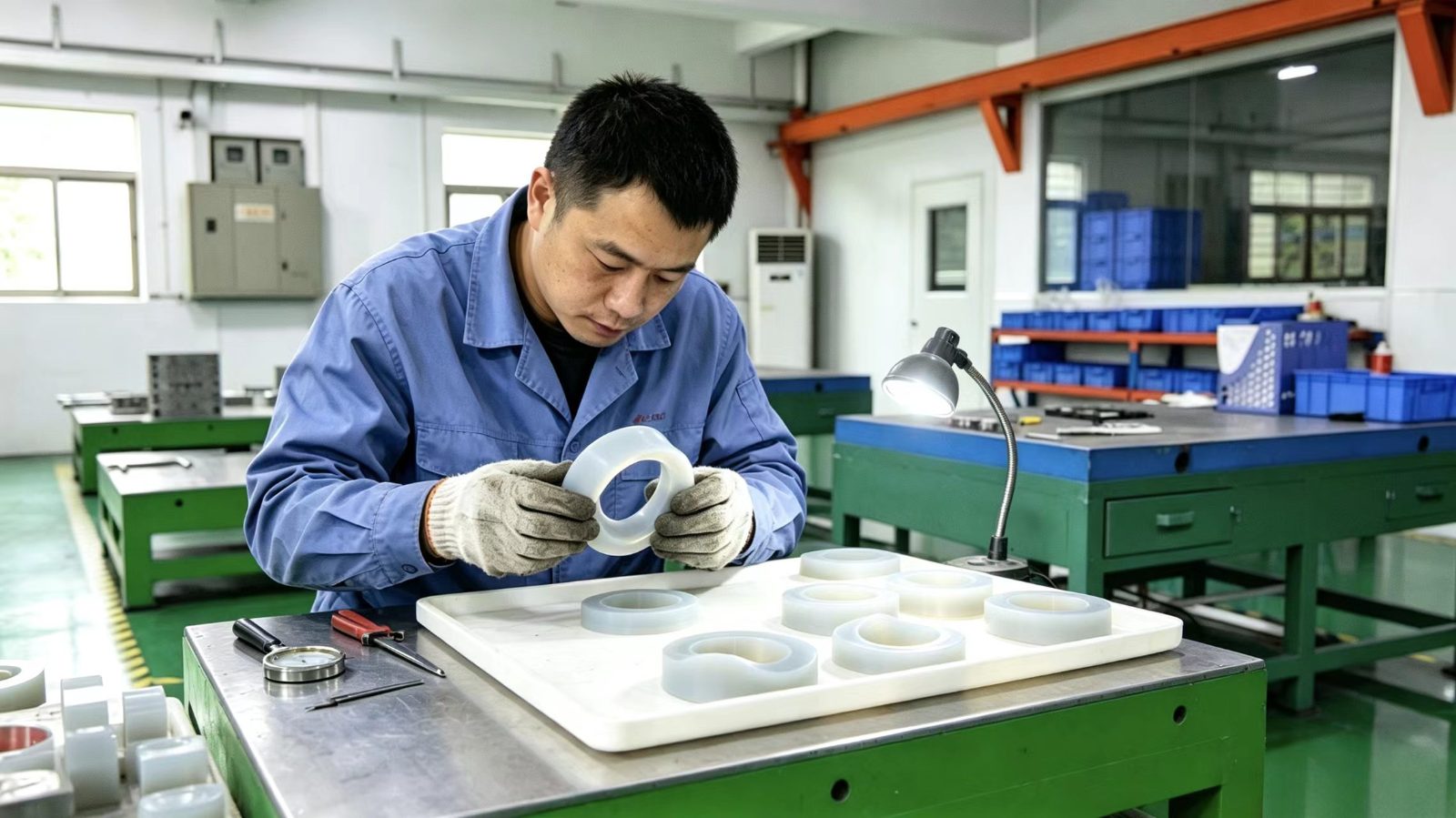
Proper mold design considers potential production challenges from the outset. Anticipating issues such as thermal expansion or shrinkage helps mitigate risks during production, maintaining consistent part dimensions and minimizing rejections.
Investing in durable molds translates directly into cost benefits for large production runs. The initial outlay on high-quality materials and precise machining is offset by reduced downtime and consistent production quality, thus enabling savings through fewer defects and prolonged mold life. Overall, the success of the custom mold fabrication step is a key component in achieving the cost reduction goals associated with manufacturing silicone parts.
3. Precision Silicone Injection Molding Process
The precision silicone injection molding process is comprised of several critical steps that directly impact both cost-efficiency and part quality.
The cycle begins with material preparation, ensuring silicone compounds are at optimal viscosity for injection. The precision of the material fill significantly influences cycle times—swift filling reduces the cycle duration, subsequently minimizing operating costs.
Temperature control is a cornerstone of the process, given silicone’s sensitivity to heat fluctuations. Maintaining consistent thermal conditions throughout the mold cavity via regulated heating elements reduces cycle variability and ensures dimensional accuracy. This precise temperature management is essential not only for preserving material properties but also for avoiding defects such as warping and incomplete fills.
To achieve high-quality results in silicone injection molding, it’s advisable for buyers to ensure their suppliers use monitoring systems that allow for adjustments to injection parameters when necessary. Adjustments may be needed to accommodate variations in design, like part thickness or intricate geometries. Parameters including injection speed, pressure, and mold temperature might be tweaked to optimize flow and prevent issues like flash or voids. Such precise tuning is crucial to adapt to different part designs and to ensure a uniformity in quality—key factors for cost-effective production.
Buyers might also consider suppliers who implement systems for collecting data throughout the injection process to identify patterns and predict potential quality issues. By keeping cycle times efficient and ensuring consistent quality, precision silicone injection molding significantly reduces production costs and enhances operational efficiency.
4. Identifying Potential Process Failures
Process failures in silicone injection molding can significantly affect both production costs and time-to-market.
Common issues like flash, short shots, and bubbles often occur due to improper mold design or incorrect molding conditions. Flash, for instance, happens when excess material leaks out of the mold cavity, requiring additional post-processing to trim away the excess. This increases labor costs and time. Short shots occur when the mold cavity is not completely filled, resulting in incomplete parts that waste material and necessitate remanufacturing.
Bubbles within the molded silicone can compromise the integrity and appearance of the final product. These defects typically arise from improper venting within the mold or incorrect injection parameters, such as pressure or temperature settings. Additionally, material degradation over time is a concern, often caused by inappropriate curing temperatures or extended dwell times, leading to brittle or discolored components that fail to meet quality standards.
To mitigate these faults, implementing robust troubleshooting techniques is critical. Corrective actions include precisely calibrating temperature and pressure settings and ensuring adequate mold venting to allow trapped air to escape. Utilizing real-time monitoring systems to track these parameters can help quickly identify deviations that might lead to defects.
Furthermore, establishing proper molding conditions is key to preventing material degradation. For example, consistently maintaining cure temperatures within the specified range prevents premature aging of the silicone. Regular inspection procedures during production further help catch defects early. Routine inspections involve checking for surface anomalies like flash, identifying underfilled areas indicative of short shots, and using non-destructive testing methods to detect voids or bubbles within the material.
Early detection through these methods not only minimizes the waste of resources but also ensures timely correction of anomalies, ultimately preserving production efficiency and cost-effectiveness.
5. Quality Control and Final Inspection
Quality control is critical when manufacturing silicone parts, due to their demanding end-use applications.
Once the parts are molded, a multi-layered inspection process ensures they meet all specified criteria before shipping. Precision measurement instruments, such as coordinate measuring machines (CMM), are employed to verify critical dimensions against design tolerances. Tolerances vary depending on part complexity and usage, but even minor deviations can lead to functional inefficiencies in the final product.
Visual inspections are conducted to pinpoint any surface flaws such as streaks, flash, or particulate contamination. Line operators use magnification tools, including optical comparators, to detect imperfections invisible to the naked eye. This step is particularly important for applications requiring perfect aesthetic appearance, like consumer products or med-tech parts, where surface quality is non-negotiable.
Critical documentation consolidates all data from these inspections into thorough records, verifying the precision and uniformity of both the mold and the final parts. It also serves as an integral record for traceability and compliance with industry standards. Having comprehensive documentation is essential, as it affirms the consistency and quality of each batch, meeting the requirements of ISO 9001:2015 certification held by manufacturers like Yiot Technology Co., Ltd..
Material property verification involves tools like durometers, which test silicone hardness, ensuring it meets the specifications. Additionally, thermogravimetric analysis (TGA) may be used to check thermal stability and decomposition rates, vital for applications within extreme environments. These post-molding evaluations confirm that the materials maintain integrity in real-world conditions.
Key Quality Control Parameters for Silicone Parts
| Parameter | Typical Value | Why It Matters |
|---|---|---|
| Dimensional Tolerance | ±0.1 mm per drawing | Ensures proper fit and function in assembled products |
| Surface Finish Quality | Free from flash & streaks | Aesthetic and functional reliability |
| Hardness | Shore A 50-70 | Impacts flexibility and end-use performance |
| Thermal Stability | Checked via TGA | Ensures durability under high-temperature conditions |
| Documentation Accuracy | Comprehensive records | Provides traceability and quality assurance |
Quality checks serve as the last line of defense before a silicone part reaches the client, ensuring each component fulfills its intended purpose with lasting reliability.
Ensure Long Term Cost Savings and Quality
To truly ensure long-term cost savings and quality in silicone molding, a dynamic approach focusing on continuous evaluation and maintenance is key.
It’s not enough to set a mold and forget it; regular assessments of both mold and part performance are crucial. This ongoing evaluation can identify subtle changes in performance that could indicate wear, allowing for preemptive corrections before they escalate into costly issues.
Regular maintenance is a cornerstone of extending the lifespan of your molds. This includes periodic cleaning and inspection to identify wear or damage that can affect part quality. Tools such as CNC machines play a role here, too, allowing for precise restoration of mold surfaces. By keeping molds in optimal condition, companies can not only extend their useful life but also delay the significant expense of complete mold replacements, thus directly contributing to cost savings.
Partner selection is another critical factor. Choosing a reliable partner like Custom injection molds for plastic parts can profoundly impact quality and costs. Experienced partners bring critical insights into mold design that mitigate potential issues and facilitate easier adjustments, thus preserving both time and budget.
Scalability is equally vital when considering production cost savings. As demand fluctuates, the ability to scale production efficiently can prevent both overproduction and shortages, thereby balancing inventory costs effectively. A well-designed mold that accommodates scalability can turn these challenges into opportunities for cost reduction during high-production phases.
In evaluating your current processes, consider: Are there areas where mold performance lags, or maintenance is inconsistent? Examining these factors can uncover inefficiencies and hidden costs, making a detailed review of current strategies worthwhile to achieving the best return on investment.
Frequently asked questions
What are common misconceptions about cost savings with custom molds?
Many believe custom molds are uniformly expensive. However, the cost per unit decreases significantly with higher production volumes. The initial investment in a custom mold can also be offset by reduced defect rates and less waste.
How do initial costs compare to long-term cost savings?
While the upfront cost of custom molds can be substantial, the efficiency gains during production lead to reduced cycle times and material usage, resulting in lower per-unit costs over the mold’s lifespan.
What about mold maintenance and lifespan?
Regular maintenance extends the life of a mold, reducing the need for frequent replacements. A well-maintained mold maintains part quality and reduces unforeseen costs from defects or production stoppages.
How can part design adjustments impact cost efficiency?
Designing parts for manufacturability can minimize production issues like flash and short shots. Simplifying design without compromising function not only reduces mold complexity but also cuts down on material waste and cycle times, enhancing overall cost-efficiency.
Frequently asked questions
How does a custom mold reduce costs over time?
A custom mold is tailored to specific part designs and production volumes, minimizing waste and reducing cycle times, which lowers overall costs. Additionally, such molds often offer scalability, supporting larger production runs without significant redesigns.
What are common defects in silicone injection molding?
Common defects in silicone injection molding include flash, short shots, and bubbles. These issues can arise due to improper mold design, inadequate temperature control, or incorrect injection parameters, impacting both part quality and production efficiency.
How often should custom molds be maintained?
Regular maintenance is crucial for extending the life of custom molds. Typically, maintenance intervals depend on the production scale and material types used, but checking molds after every major production run is recommended to prevent wear-related defects.
Request a project review
Send the 3D model, 2D drawing, material requirements, annual volume and critical dimensions. The team will identify open technical questions before tooling is quoted.