When an electronics OEM was facing delays and increased costs in their product launch due to design flaws in plastic enclosures, they turned to Yiot Technology Co., Ltd. for a solution. The use of Design for Manufacture (DFM) analysis became crucial. By implementing DFM principles, the design was streamlined, minimizing tooling complexities and ensuring efficient mass production. Consequently, the client saw a significant reduction in time-to-market and cost savings, ultimately improving the product’s profitability. Here’s how YIOT tackled the challenge, step by step.
Key takeaways
- An electronics OEM found themselves grappling with significant production challenges that threatened their project timelines and market competitiveness.
- Delays in the product launch timeline presented a critical challenge for buyers in the electronics industry, reliant on precise timing for market entry.
- Design for Manufacturing (DFM) is a critical phase in the mold production lifecycle, ensuring that designs transition smoothly from the drawing board to the manufacturing floor.
- Streamlining the DFM (Design for Manufacturability) process proved to be a game-changer, as it precipitated a significant overhaul in the production timeline.
- Deep consideration of Design for Manufacturability (DFM) at the outset is pivotal in forestalling costly setbacks during injection mold production.
The Situation: A Buyer in Trouble
An electronics OEM found themselves grappling with significant production challenges that threatened their project timelines and market competitiveness.
At the heart of the issue were initial product designs that contained overly complex features which were not feasible for mass production. These designs, although innovative on paper, were incompatible with the realities of traditional manufacturing processes, particularly injection molding.
The intricate design structures introduced during the product conception phase led to a cascade of complications when put into practice. The designs featured tight corners and undermined walls that exceeded the tolerances typically achievable in high-volume plastic injection molding. As a result, manufacturing teams were unable to replicate the intended design accurately at scale, leading to frequent defects and rejections during quality control checks.
Additionally, the quest for achieving ultra-precision in mass production was falling short of expectations. The designs required achieving tight tolerances that were challenging to maintain consistently across the production run. In practice, this led to a noticeable increase in defective units and substantial rework, which rapidly inflated production costs beyond initial estimates. The cycle of redesigns and delays further compounded these issues, straining the OEM’s resources both financially and temporally.
The urgency to resolve these issues was underscored by the looming pressure from market dynamics. The electronics sector is fiercely competitive, and the OEM’s ability to meet scheduled product launch dates was pivotal to maintaining their market position. A delay could result in lost sales opportunities and diminishing brand reputation, especially with competitors poised to fill any gaps left in the market.
To exacerbate the problem, the electronics OEM had limited experience in navigating complex manufacturing landscapes. Their internal capabilities were stretched thin, and expertise in Design for Manufacturability (DFM) was lacking. This put them in a precarious position where understanding and optimizing the design for the realities of injection mold production became imperative.
This situation called for immediate intervention. Seeking expertise, the OEM partnered with Yiot Technology Co., Ltd., who specializes in precision plastic injection molding. Their expertise promised a pathway through the quagmire, guiding the OEM in crafting feasible designs aligned with their ambitious production goals.
Faced with these challenges, choosing the right collaborator became indispensable. Resources such as Choosing a Custom Plastic Injection Mold Supplier in China provided guidance in selecting an appropriate partner to navigate these complexities.
What Was at Stake: Delays and Costs
Delays in the product launch timeline presented a critical challenge for buyers in the electronics industry, reliant on precise timing for market entry.
Initial product designs, while innovative, suffered from complex features that were not compatible with rapid, large-scale production timelines. Without immediate resolution, these manufacturers faced a significant threat of postponing their market debut, which could lead to forfeiting early market share and a potential decrease in competitive standing.
Costs were escalating sharply due to a series of design iterations necessary to correct manufacturing issues identified post-design. Each revision not only inflated costs but also created feedback loops of analysis and modification, further compounding project delays. The financial implications were stark: budgets initially allocated for production were disproportionately consumed by the need for redesign and troubleshooting. Inadequate initial DFM (Design for Manufacturability) analysis thus meant funds were consistently being redirected from productive to corrective measures.
Operational efficiencies took a blow as these design phase hiccups trickled into the manufacturing workflow, creating compounded inefficiencies on the shop floor. The presence of unanticipated hurdles in translating design into manufacturable outputs meant machines sat idle more often than scheduled. This not only led to a misuse of factory resources but also incurred additional costs through unused labor and machine downtime.
The repercussions of persisting with the status quo method threatened not just financial loss but a strategic disadvantage. Buyers ran the risk of losing their competitive edge in a rapidly evolving electronics market where speed and efficiency are paramount. Meeting the expectations for high turnover and quick adaptability in production schedules became less feasible, further jeopardizing their ability to retain, if not improve, their market position. Addressing these stakes swiftly was not merely an exercise in restoring order to production but a critical move to sustain the buyer’s market presence.
YIOT’s Step-by-Step DFM Analysis Process
Design for Manufacturing (DFM) is a critical phase in the mold production lifecycle, ensuring that designs transition smoothly from the drawing board to the manufacturing floor.
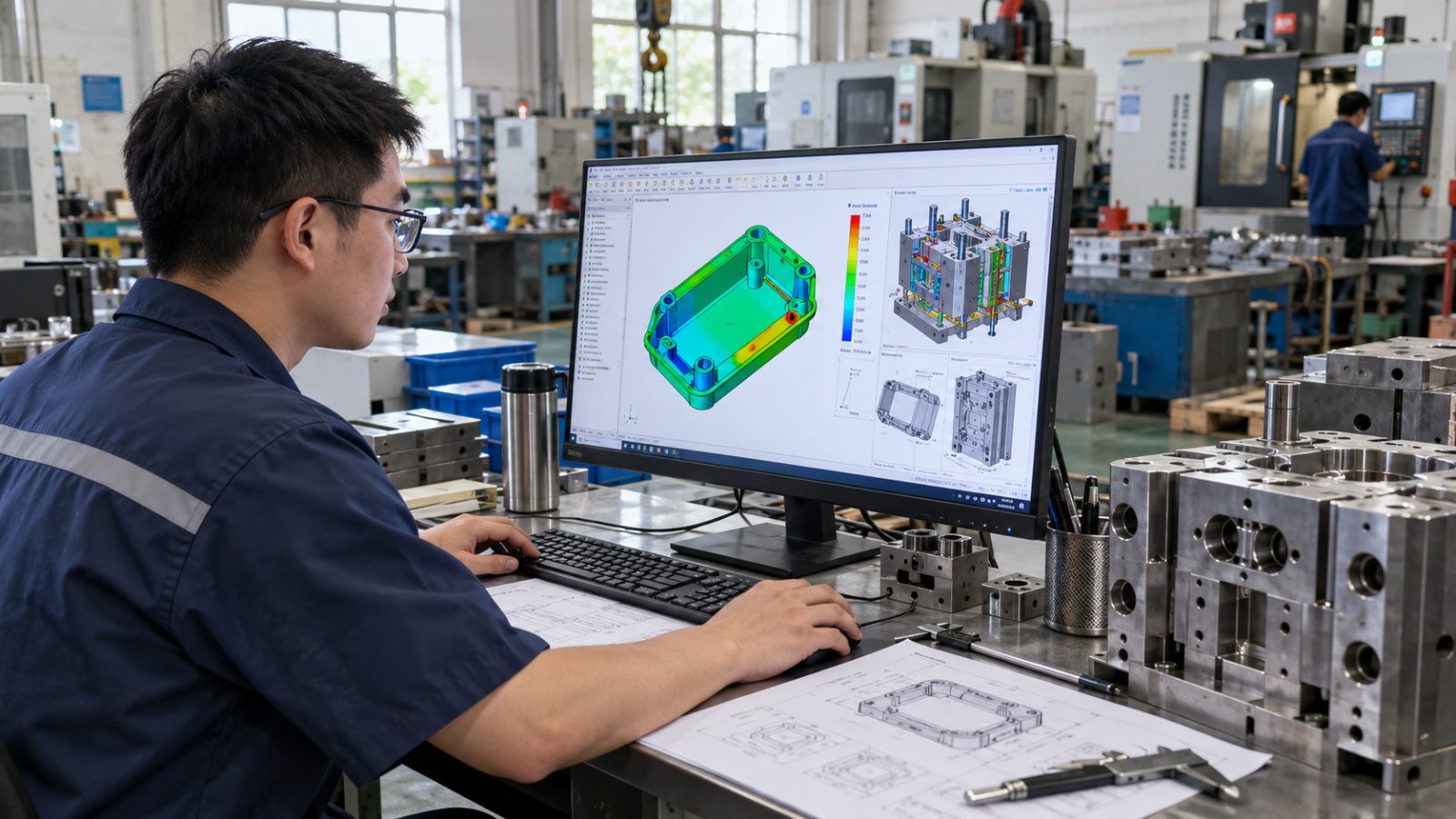
Collaboration with the client’s design team plays a pivotal role in the DFM process. Understanding their vision and constraints allows manufacturers to consider feasible design modifications that enhance manufacturability without compromising essential functional or aesthetic criteria. During collaborative meetings, teams often brainstorm alongside the client’s design engineers, utilizing tools like CAD software and mold flow simulations to visualize how proposed changes affect the overall design.
For optimal manufacturability, it is advisable for buyers to consider adjustments such as wall thickness, draft angles, or eliminating undercuts that complicate mold design. Careful consideration can prevent complex designs from reaching production untouched, potentially avoiding unnecessary production delays and defects.
Validation through simulation and testing is a common industry practice to ensure that design changes are feasible and meet functional requirements while maintaining cost-effectiveness.
Key Stages in DFM Process
| Stage | Description | Tools Used | Team Involved | Outcome |
|---|---|---|---|---|
| Design Assessment | Industry practice includes evaluating CAD designs for potential challenges. | CAD Software | Design Engineers | Identified potential risks in design |
| Collaboration | Work with client to optimize design for manufacturability. | CAD, Mold Flow Simulations | YIOT & Client Design Teams | Agreed-upon feasible modifications |
| Recommendation | Suggest changes to improve design based on industry standards. | CAD Analysis | Mold Design Experts | Optimized designs considered for validation |
| Simulation & Testing | Common practice involves simulating manufacturing to check feasibility of changes. | CAE Tools | Engineering Analysts | Considered manufacturability readiness for production |
Throughout the DFM process, ensuring a seamless shift from design to production is the aim. A systematic approach improves manufacturability and significantly enhances overall production efficiency. For deeper insights, explore our Case Walkthrough: Crafting Custom Injection Molds for Plastic Medical Equipment Housings.
The Result: Efficient Production and Cost Reduction
Streamlining the DFM (Design for Manufacturability) process proved to be a game-changer, as it precipitated a significant overhaul in the production timeline.
By optimizing the design to align more closely with manufacturing capabilities, the acceleration of the time-to-market becomes possible through refined and focused manufacturing steps. Eliminating redundancies and potential pitfalls in the production line helps prepare the OEM to meet market demands ahead of competitors, reinforcing its market position.
The positive impact of these refinements also extends to production costs. By simplifying design complexities and eliminating unnecessary features that complicated the manufacturing process, overconsumption of resources can be minimized. A streamlined design can reduce machine wear and processing time, contributing to lower operational costs. The use of improved CNC machining and EDM techniques ensures precise execution without compromising on quality.
Material efficiency further enhances the cost-effectiveness of a project. Through strategic material selection and optimized design layouts, waste is minimized. Adjusting for material flow and behavior can align with sustainable production practices. With material usage carefully calculated, the reduction in waste directly contributes to significant cost savings.
Notably, the improvements in part quality are paramount. Enhanced design clarity and precision lead to fewer defects, reducing the need for costly rework and minimizing scrap rates. Achieving consistency in part dimensions and integrity provides the OEM with components that meet stringent quality standards reliably. This improvement not only diminishes production hiccups but also builds a foundation for long-term savings by reducing warranty claims and defects in field use.

Overall, focusing on optimizing design for manufacturability results in a seamless manufacturing process that addresses the client’s challenges while creating value through cost reduction and enhanced efficiency. These advancements benefit the OEM’s production cycle and secure a more sustainable and profitable future in competitive markets.
Key Takeaways for Buyers Considering DFM
Deep consideration of Design for Manufacturability (DFM) at the outset is pivotal in forestalling costly setbacks during injection mold production.
An informed and strategic approach to DFM can notably alter both time-to-market and production costs for custom injection molds. A critical element of successful DFM is the early identification of design constraints and the transformation of these constraints into opportunities for efficiency and innovation. By conducting a thorough DFM analysis, manufacturers can preemptively address potential production pitfalls, resulting in smoother project execution.
The Power of Collaboration
A synergistic relationship between the client and the manufacturer is central to the success of DFM analysis. Effective collaboration allows for the identification and resolution of potential design issues before they translate into production problems. Clients should seek manufacturers who offer comprehensive feedback on design constraints to enhance manufacturability. This dialogue can lead to enhanced innovation as clients adapt their designs in response to manufacturing capabilities and constraints discussed during the DFM process.
Certification: A Mark of Reliability
Opting to work with ISO 9001:2015 certified suppliers adds a layer of assurance in the quality and process reliability of injection mold production. ISO 9001:2015 certification denotes a supplier’s commitment to maintaining robust quality management systems, which can include process reliability. Reliable adherence to such standards significantly reduces the risk of quality-related issues later in the production process, enhancing both the efficiency and cost-effectiveness of the project.
Transforming Constraints into Opportunities
DFM is not merely about identifying constraints; it is about leveraging those constraints to unearth potential enhancements. By considering DFM early in the design phase, features that might initially seem unworkable within current manufacturing technologies can be adjusted or reimagined to fit into the production flow seamlessly. This capacity to pivot constraints into innovative solutions can provide a competitive edge, particularly for electronics OEMs, where design agility can dictate market success. For more on these opportunities, see Why Choose Custom Plastic Injection Molds for Electronics OEMs in China?.
Altogether, embracing DFM not only minimizes costly oversights but also enhances the overall manufacturability of a design, delivering substantial long-term benefits.
How We Can Assist with Your Design Challenges
Let us take a detailed look at your current design constraints and prototypes.
By analyzing these, we can provide actionable insights to enhance manufacturability and efficiency. Our expertise in Design for Manufacturability (DFM) has led to successful outcomes in previous projects, evidenced by issues resolved and reduced costs. We invite you to share your design drawings with us so we can discuss tangible improvements tailored to your specifications.
Frequently asked questions
What is DFM analysis in injection molds?
DFM analysis in injection molds involves evaluating designs for manufacturability. The goal is to optimize the design, reduce production risks, and lower costs. It’s a critical step in ensuring smooth transition from design to manufacture, often involving software simulations.
Why are design modifications often necessary in DFM?
Design modifications in DFM aim to adapt the product for efficient manufacture. This can involve simplifying features to ease tooling and production, ensuring consistency in mass production, and ultimately minimizing defects and reducing costs.
Request a project review
Send the 3D model, 2D drawing, material requirements, annual volume and critical dimensions. The team will identify open technical questions before tooling is quoted.