
Most buyers believe that issuing a comprehensive RFQ for custom injection molds is straightforward—simply list the part dimensions and the material. However, to receive precise and timely quotes, RFQs must include detailed specifications and contextual information. It is important to emphasize the need for a detailed RFQ to prevent delays and misunderstandings during negotiation. This involves specifying the design, material, expected production volumes, and quality standards. Clarifying these aspects ensures suppliers can provide accurate timelines and pricing. Thus, investing time in preparing your RFQ properly leads to smoother procurement and higher satisfaction with the final molds.
Key takeaways
- Incomplete RFQs for custom injection molds often lead to frustrating delays.
- Ideal RFQ preparation for custom injection molds for automotive components starts with a detailed checklist.
- The precision of an RFQ can significantly impact the cost accuracy when sourcing custom injection molds for plastic automotive components.
- When constructing a well-rounded RFQ for custom injection molds for automotive components, the details can make all the difference.
- Evaluating the Supplier’s Response.
Challenges with Incomplete RFQs
Incomplete RFQs for custom injection molds often lead to frustrating delays. Typical delays stem from vague specifications. When critical details are absent, suppliers struggle to provide precise quotes. For instance, an RFQ missing specific measurement tolerances or desired part features can cause significant back-and-forths. Suppliers need these details to calculate machining processes accurately, estimate mold complexity, and predict tooling costs. The absence of this information typically results in a nebulous response, rather than an actionable quote.
Unclear specifications impact mold complexity. Detailed specifications are essential for determining the mold’s complexity. Without them, suppliers might either overestimate, making the mold more complex and costly than necessary, or underestimate, risking inadequate functionality. Each design nuance, from draft angles to undercuts, influences the final mold design. Without these precise details, suppliers are left to assume, which can lead to inaccurate quotes.
Omitting target production volumes hinders cost accuracy. If an RFQ fails to specify production volumes, suppliers cannot accurately determine material wear and tooling requirements, both of which heavily influence cost estimates. For example, a mold intended for 5,000 units might be constructed differently than one meant for 50,000 units. This oversight can result in misaligned expectations regarding dosage cycles and wear management, impacting cost estimates significantly.
Material choices can make or break the process. Lastly, ambiguous material choices dramatically affect the quote’s accuracy. Materials vary widely in cost, thermal properties, and machinability. A lack of clarity here forces suppliers to make assumptions, leading to potential mismatches in material behavior and tooling compatibility. For example, selecting ABS over polycarbonate not only modifies material cost but also affects cooling times and shrinkage rates.
Avoiding these common pitfalls can streamline the RFQ process, ensuring swift and accurate responses. Buyers should refer to comprehensive resources like the RFQ Checklist for Custom Injection Molds for Plastic Automotive Components to enhance their RFQs. Having a robust list can guide procurement managers in assembling RFQs that facilitate clear, accurate, and prompt supplier communications.
Comprehensive RFQ Checklist
Ideal RFQ preparation for custom injection molds for automotive components starts with a detailed checklist.
Each item ensures accurate, prompt quotes and minimizes potential misunderstandings.
Specific CAD Models. Supplied in native or neutral formats like STEP or Parasolid, CAD models should capture every detail of the part, including critical-to-function dimensions and tolerance levels. These models enable precise mold design and avoid costly revisions.
Material Properties and Specifications. Clearly defined specifications, including resin type and any additives, are crucial. Standards such as ASTM or ISO can help benchmark these properties. This clarity influences the selection of tool steels and processing parameters, ultimately affecting the cost and cycle time.
Intended Application and Environment. Highlight the specific conditions the component will endure, such as temperature extremes or chemical exposure. This impacts the mold design, especially in selecting suitable cooling channels and venting systems to ensure part integrity.
Target Production Volumes and Timelines. Define expected output volumes and delivery schedules. Suppliers use this data to determine cavity numbers and material selection, balancing lead time with production efficiency.
Essential Items for RFQ Clarity
| RFQ Item | Purpose | Impact on Quoting | Supplier Questions | Common Mistakes |
|---|---|---|---|---|
| Specific CAD Models | Enable precise mold design | Prevents revisions and cost overruns | Is the model in a supported format? | Vague or incomplete geometry |
| Material Properties and Specifications | Benchmark standards and processing requirements | Influences material choice and tooling | Are there any special material needs? | Missing or unclear specifications |
| Intended Application and Environment | Determine environmental durability requirements | Affects coolant configuration and vent strategy | Are temperature and chemical exposures considered? | Ignoring environmental impacts |
| Target Production Volumes and Timelines | Plan production capacity and scheduling | Dictates cavity count and lead time | Are volumes realistic for planned capacities? | Underestimating production demands |
Crafting a comprehensive RFQ with these well-detailed aspects empowers suppliers to provide accurate and timely quotes. By preemptively addressing supplier questions and avoiding common errors, the RFQ process becomes highly efficient, reducing lead time for project initiation.
Consequences of Detailed RFQs
The precision of an RFQ can significantly impact the cost accuracy when sourcing custom injection molds for plastic automotive components.
By specifying critical dimensions, expected tolerances, resin type by specification (e.g., ASTM D638), and the production environment, buyers can achieve quotes that reflect the true scope of their project. Detailed RFQs eliminate the guesswork and enable suppliers to propose realistic pricing, which in turn helps procurement managers plan their budgets with greater reliability.
Thorough specifications also reduce quote turnaround times. Suppliers can quickly assess the feasibility of the project without the need to request further information, which typically prolongs the quoting process. When the RFQ includes all necessary details upfront — such as the CAD drawings in a standard format, expected order volumes, and specific post-processing needs — suppliers respond more swiftly with comprehensive proposals.
Improving project timelines. A well-prepared RFQ lays the groundwork for an accurate project timeline. With clear expectations set at the outset, the risk of miscommunication or misunderstanding about project requirements diminishes. This clarity supports efficient resource planning on the supplier’s end, allowing for better alignment with the purchaser’s schedule.
Enhancing supplier communication. Detailed RFQs foster open lines of communication by providing a common reference point for all involved parties. When suppliers understand precisely what is required, dialogues about adjustments or innovations become more productive. This enhanced communication not only leads to sharper insights but also builds trust and alignment between the buyer and supplier.
Mitigating risks. Perhaps most importantly, solid RFQs mitigate the risks of scope creep and cost overruns. When project parameters and requirements are laid out with specificity from the start, unexpected modifications are minimized — reducing unforeseen expenses and timeline extensions. This level of foresight ensures that all parties are unwaveringly committed to the same objectives from inception to project completion.
Ultimately, the precision of an RFQ serves as the foundation for a successful partnership and a seamless production cycle, emphasizing accuracy over approximation.
Sample RFQ for Automotive Components
When constructing a well-rounded RFQ for custom injection molds for automotive components, the details can make all the difference.
Key elements lead to precise quotes and effective supplier collaboration.
CAD Models. A comprehensive RFQ begins with well-defined 3D CAD models in formats such as STEP or Parasolid, accompanied by detailed 2D drawings in PDF or CAD formats. These drawings must identify critical dimensions, required tolerances, surface finishes, and any specific features like seals or snap fits. This specificity ensures that the supplier has all necessary data to accurately assess the mold design complexity and predict manufacturing challenges.
Material Specifications. This RFQ clearly states the proto-parts’ resin grade — for example, a high-impact, temperature-resistant PBT blend. By precisely specifying material properties, you minimize the risk of misunderstandings that could lead to production inefficiencies or material incompatibilities.
Production Volumes and Timelines. By clarifying the target production volumes and anticipated production timelines, the RFQ enables suppliers to gauge their resource allocation needs and judge whether they can meet your timeline requirements. Without this information, suppliers might assume incorrect volume expectations, affecting their capacity pricing structure.
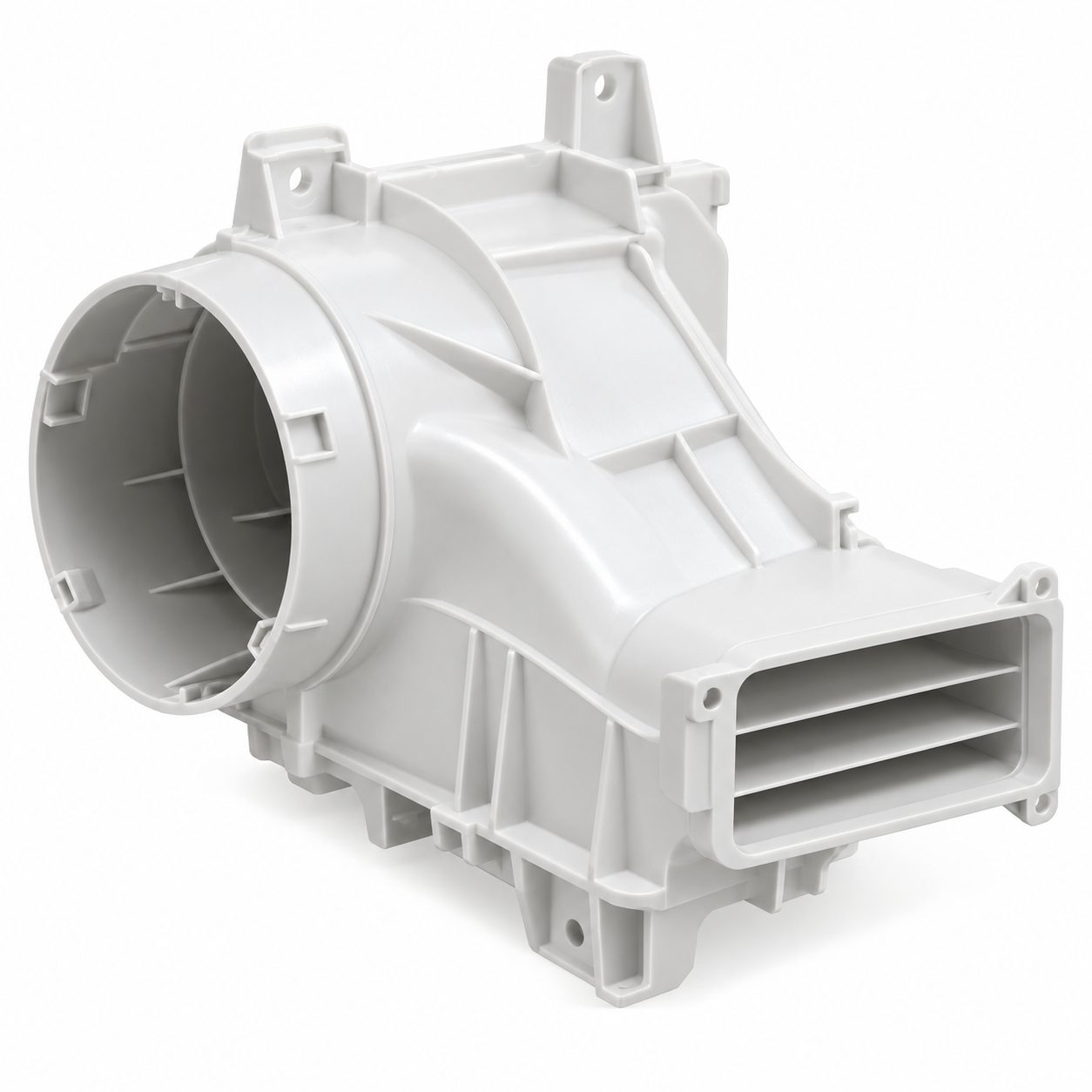
Intended Application. Highlighting how the component fits into the larger assembly — perhaps as a part of an HVAC system inside a dashboard assembly — allows suppliers to tailor their design considerations to real-world application constraints.
Analysis of Supplier Response. Upon receiving this RFQ, suppliers generally send more precise cost estimates and lead times, given the lack of ambiguity. Detailed input results in more transparent discussions about potential design adjustments and realistic feasibility assessments, thus enhancing collaboration and reducing back and forth.
Avoiding Common Pitfalls. This approach successfully bypasses typical RFQ pitfalls: vague descriptions or omitting key data points. The thorough documentation inherent to this RFQ keeps the project on track, fostering smoother negotiations and avoiding unnecessary cost overruns.
Supplier Proposal Adjustments. Due to the RFQ’s precision, suppliers can pinpoint areas for optimization—like suggesting minor design tweaks that’ll enhance manufacturability or reduce waste, which becomes mutually beneficial. The end result is a proposal that accurately reflects the scope and needs of the project, minimized risk, and aligns with expectations.
Post-RFQ Submission Process
Evaluating the Supplier’s Response. After submitting your RFQ, the ball is in the supplier’s court. Importantly, their initial feedback will often include any immediate questions and require clarification on the RFQ details. Usually, this involves confirming the completeness of the provided CAD models and verifying the specified tolerances. Expect the supplier to review your target production volumes and material choices to ensure they align with the capabilities and capacities of their facilities.
Common Requests for Clarifications. Suppliers typically ask for clarifications or additional information on areas that may affect production or pricing. These requests can include further details on the intended application of the molded part, environmental conditions it must withstand, or specific cosmetic requirements. Whether it’s confirming the precise resin grade or discussing undercut requirements, accurate responses here are crucial to avoid costly errors.
Timeline Expectations. Once your RFQ is in the supplier’s hands, a typical timeline for an initial response may vary depending on complexity, usually ranging from a few days to a couple of weeks. Complex molds or incomplete submissions will likely extend this period as suppliers work to gather and verify additional information. Clarify with the supplier upfront what the expected timeline for feedback is to manage your internal project plans effectively.
Conducting Negotiations. Upon receiving a detailed proposition, consider initiating discussions to align on cost, lead times, and technical specifications. It’s advantageous to discuss potential trade-offs if time or cost becomes a constraint — for example, considering alternative materials or adjusting design tolerances. Keeping open lines of communication with your supplier can facilitate reaching a mutually agreeable contract.
Navigating these post-RFQ steps with precision can help to establish clear, shared expectations between you and your chosen mold supplier. Prioritizing effective communication can aid in reducing miscommunication and managing timelines effectively.
Making the Right RFQ Decisions
An accurate RFQ is central to a seamless mold procurement process.
Not only does it enable more precise quotations, but it also fosters smoother supplier collaborations. Always perform a final checklist review to catch any omissions before submission. Additionally, consider evaluating potential suppliers by requesting detailed information about their capabilities or arranging visits to their facilities, as understanding their operations thoroughly can aid decision-making and relationship-building. Following these steps ensures that you are well-prepared to advance confidently in the injection mold procurement process.
Frequently asked questions
What should be considered when preparing an RFQ for automotive molds?
In preparing an RFQ, buyers should include comprehensive design details, CAD models, material specifications, target production volumes, quality standards, and timelines. Ensuring clarity in each section can help avoid ambiguities that might lead to deviations in production.
Why might a supplier request more information after receiving an RFQ?
Suppliers often ask for clarifications to ensure they fully understand your requirements, helping them provide accurate quotes and timelines. This could involve details about the material, design intricacies, or specific quality standards.
How can incomplete RFQs influence mold quotations?
Incomplete RFQs may lead to pricing inaccuracies as suppliers might need to make assumptions, potentially leading to cost overruns or underbidding. Providing detailed RFQs allows for better pricing accuracy from the start.
How does a detailed RFQ improve project timelines?
A detailed RFQ enables suppliers to accurately assess the project scope, leading to more precise timelines and avoiding unnecessary delays or adjustments once the project is underway.
Request a project review
Send the 3D model, 2D drawing, material requirements, annual volume and critical dimensions. The team will identify open technical questions before tooling is quoted.