
While certifications indicate compliance with quality management standards, they don’t automatically ensure mold accuracy or part performance. The true measure of a supplier’s capability lies beyond these labels, in adopting industry practices such as checking mold design accuracy, precision of injection molding machines, and ensuring consistency in delivering parts that meet detailed specifications. Understanding these aspects helps buyers make informed decisions rather than relying solely on certifications.
Key takeaways
- ISO 9001:2015 is one of the most misunderstood yet pivotal certifications in the realm of precision plastic injection molding.
- Achieving precision in plastic injection molding begins with the foundation—mold design.
- One common belief in the plastic injection molding industry is that all precision machines deliver consistently superior quality.
- When it comes to ensuring the precision of plastic injection molds and parts, relying solely on supplier claims or certifications can lead to significant discrepancies.
- When selecting a precision plastic injection molding supplier in Dongguan, it’s crucial to look beyond mere certifications like ISO 9001:2015.
Certifications: Understanding Their Role
ISO 9001:2015 is one of the most misunderstood yet pivotal certifications in the realm of precision plastic injection molding.
This standard delineates the criteria for a quality management system, prioritizing continual improvement, and meeting customer requirements among other elements. Compliant companies, such as Yiot Technology Co., Ltd., demonstrate an ability to consistently provide products and services that fulfill regulatory and customer requirements.
However, while ISO 9001:2015 lays the groundwork for quality management, it is not a direct indicator of precision in injection molding processes. In essence, it sets a baseline, ensuring that a company has the means to identify and rectify process errors over time, but it doesn’t measure precision metrics like tolerances or surface finishes directly. Buyers often misconceive this certification as a guarantee of consistent part precision, a belief that can lead to unrealistic expectations.
Certifications should be viewed as a part of the larger picture. They assure that systematic processes are in place for quality management but don’t speak to the unique capabilities of machines or the skill of the operators. This is particularly crucial in fields like injection molding, where precision down to microns is often required. Simply having ISO 9001:2015 doesn’t compensate for variations in operator skill levels that can influence outcomes dramatically.
It’s imperative to understand the certifications’ limitations and place equal or greater emphasis on a supplier’s track record. Look at past performance, audits of facility conditions, and statistical quality control as more indicative measures of a supplier’s potential to meet your needs. Additionally, while Precision Plastic Injection Molding Manufacturer in Dongguan explains how to select suppliers, actual visits and long-term business relationships often provide insights into practical quality standards that extend beyond what’s documented.
Ultimately, an ISO certification is a strong starting point; however, it should not be the sole factor in decision-making. Understanding the complete context and verifying claims through additional performance metrics will result in more reliable outcomes than certifications alone.
Mold Design: The Reality of Precision
Achieving precision in plastic injection molding begins with the foundation—mold design.
The precision of a mold directly influences the dimensional accuracy and functionality of the final part, making it a critical step in the process. A well-designed mold ensures that plastic flows uniformly during the injection process, reducing defects such as warping or mismatched seams.
Design for Manufacturability (DFM) analysis is integral in achieving this precision by evaluating how a part’s design will fare during actual production. At YIOT, a thorough DFM analysis scrutinizes every aspect of the mold and part design, from material selection to predicted flow pattern, ensuring the design is optimal for manufacturing. This preemptive examination minimizes potential errors that could lead to costly design revisions or scrap parts. For instance, inadequate draft angles or inappropriate gate sizing can lead to issues such as sink marks, air traps, or even ejection difficulty, which are often overlooked until production begins.
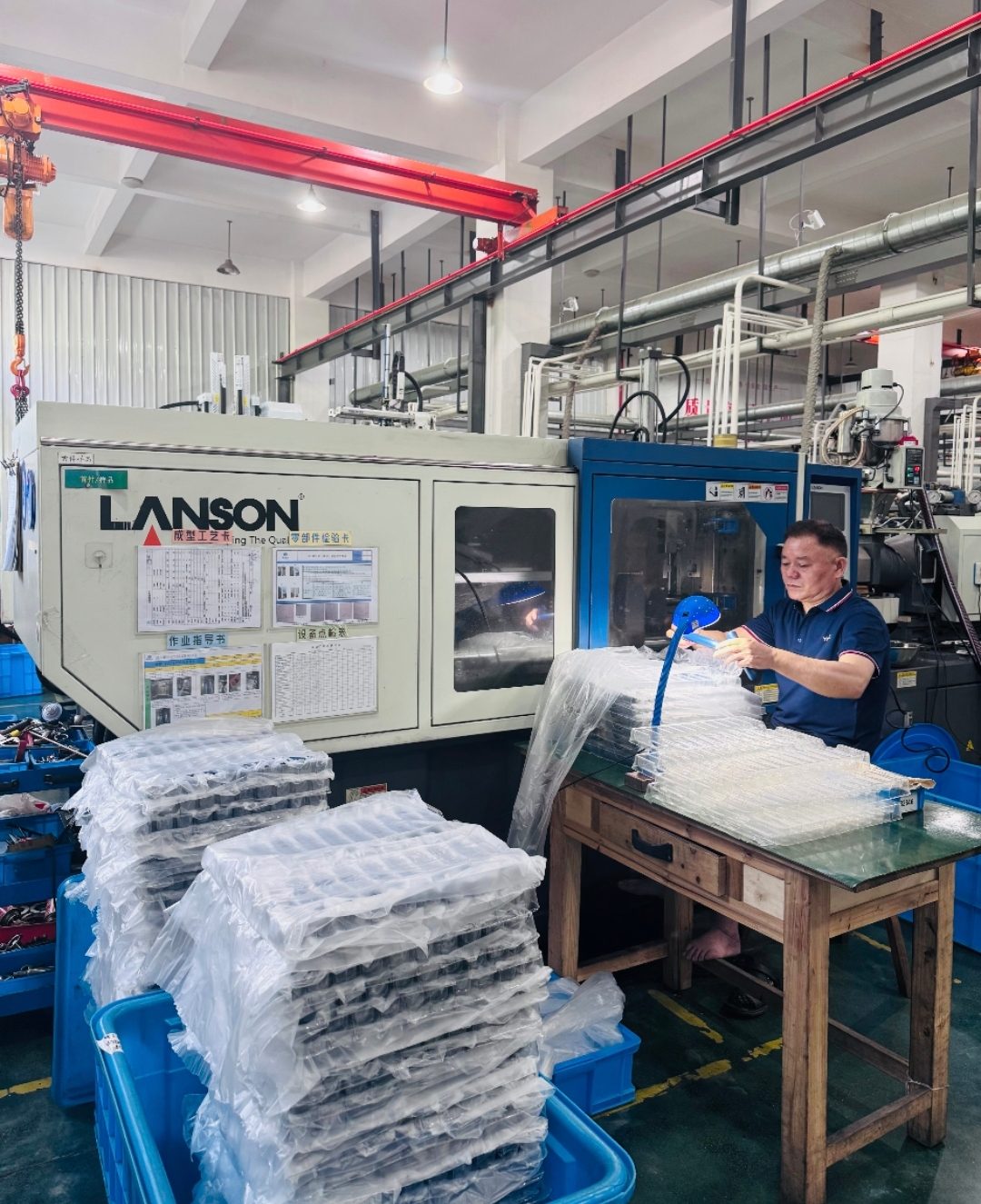
Despite supplier certifications such as ISO 9001:2015, which indicates a commitment to quality management systems, common pitfalls still occur if mold design is not meticulously examined. A certified supplier may have the processes in place but can fall short in execution if a DFM analysis is superficial. As a result, it is crucial for buyers to prioritize design precision when selecting a supplier, ensuring they ask for a deep and careful examination of each component’s requirements.
The industry values a design approach that integrates simulations to assess different hypothetical scenarios, thus enhancing the robustness and accuracy of a mold design before production. Buyers should consider asking suppliers whether simulations are used as part of their design process to mitigate potential flaws.
When design flaws do escape into production, their impact can be devastating—ranging from production delays to significant financial losses due to part rejections. Therefore, in the molding industry, treating mold design as a critical phase can ensure efficiency and success in subsequent manufacturing stages. For those seeking in-depth analyses, Understanding DFM Analysis for Plastic Injection Parts Suppliers in Shenzhen offers valuable insights into the specifics of DFM in achieving precision and quality.
Machine Precision: Fact vs. Belief
One common belief in the plastic injection molding industry is that all precision machines deliver consistently superior quality.
This oversimplification often arises from marketing claims emphasizing machine capabilities without acknowledging the nuances of machine maintenance and calibration. Reality in this field is complex: while modern injection molding machines can achieve impressive precision, their performance heavily depends on regular, meticulous calibration and maintenance.
Precision injection molding machines have the potential to maintain very tight tolerances due to advanced technologies such as servo-driven motors and feedback systems ensuring that each injection cycle is uniform. These machines, when accurately calibrated, produce highly consistent parts across large production runs, essential for industries like automotive and electronics where tight tolerances are critical.
However, it is a misconception that high-quality output is solely a function of machine capability. In many instances, variable results arise from differences in calibration procedures across suppliers. Certain suppliers may skip regular calibration cycles, leading to gradual drift in performance. A machine ostensibly capable of precision might deliver inconsistent quality if not periodically verified and recalibrated according to exacting standards.
Achieving sustained machine accuracy often involves adhering to rigorous calibration schedules and implementing regular audits to ensure peak performance. Buyers should consider asking potential suppliers about their calibration practices and real-time monitoring of critical parameters that align with industry standards to ensure consistency in part production.
Neglecting machine precision can lead to a gradual deviation from specifications, affecting component reliability. These considerations debunk the belief that machine purchases alone secure precision quality. It is the vigilant oversight and sustained accuracy measures that differentiate competent suppliers from the rest, underscoring the value of choosing partners who prioritize ongoing precision management.
Verification Beyond Assumptions
When it comes to ensuring the precision of plastic injection molds and parts, relying solely on supplier claims or certifications can lead to significant discrepancies.
Assessing the actual precision requires verifiable methods and metrics. The key performance indicators (KPIs) to focus on include dimensional precision, surface quality, and material consistency. These KPIs can be verified using specific tools and technologies.
One of the vital verification practices is a dimensional inspection using coordinate measuring machines (CMM). This equipment precisely assesses whether the part’s dimensions conform to the specified tolerance limits. YIOT employs advanced CMMs for this purpose, ensuring that each mold and part falls within acceptable deviation ranges, typically in the micrometer level.
Verification Techniques Compared
| Technique | Best for | Limitations | Verification Equipment | What to Ask Supplier |
|---|---|---|---|---|
| CMM Inspection | Checking dimensional accuracy | High setup time | CMM Machines | Calibration history |
| Visual Inspection | Surface defects analysis | Subjective, relies on inspector | Visual Magnification Tools | Inspector training level |
| CT Scanning | Internal feature verification | Expensive, complex to interpret | CT Scanners | Access to scan samples |
| Digital Microscopy | Surface and feature quality | Limited to surface checks | Digital Microscope | Microscopy reports availability |
Additionally, engaging the supplier in routine quality assessments is crucial. YIOT champions real-world quality checks, integrating advanced tools like digital microscopes and CT scanners to detect minute surface features and internal defects, respectively. Buyers should request measurement reports as part of suppliers’ quality documentation to truly verify claims.
For a thorough supplier vetting, build relationships with suppliers familiar with precision metrics, as detailed in Choosing the Right Plastic Injection Mold Supplier in Shenzhen. Site visits can reveal operational robustness beyond paper certificates, offering an essential insight into the equipment and practices that consistently achieve precision.
Each verification method has its advantages and potential drawbacks, so requesting a combination of these assessments during the procurement process will yield the clearest understanding of a supplier’s capabilities. Therefore, detailed and frequent communication with suppliers about inspection practices strengthens the precision assurance in your supply chain and assists in achieving consistent product quality.

Making Informed Supplier Decisions
When selecting a precision plastic injection molding supplier in Dongguan, it’s crucial to look beyond mere certifications like ISO 9001:2015.
While certifications confirm baseline management practices, they do not reflect nuanced operational strengths or weaknesses. Identifying a reliable supplier involves observing several other indicators. One such sign is consistency in communication and delivery timelines. Suppliers who maintain transparent communication and adhere predominantly to delivery schedules indicate a stable and reliable production system.
Critical Questions to Raise
During the assessment phase, prospective buyers should ask probing questions that delve deeper than surface-level assurances. Inquire about a supplier’s capacity to handle varied load volumes, their approach to workflow disruptions, and if they’ve ever been tasked with resolving particularly complex issues. Responses that highlight proactive solutions, detailed case studies, or evidence of adaptation in challenging situations often reflect a supplier’s adaptability and problem-solving prowess.
Facility Visits for Insight
Visiting a supplier’s facilities offers unique insight often missing from documented credentials. Walk through their production lines, observe their machinery, and pay attention to how materials are handled. Are there effective waste management systems in place? How do workers and supervisors react to unexpected issues? Observing these elements can provide a clearer understanding of operational efficiency and workplace culture, which can impact production quality.
Interpreting Supplier Feedback and Adjustments
Constructive feedback and visible adjustments from suppliers can be telling. A supplier willing to discuss past project obstacles and the changes enacted as a result demonstrates commitment to continuous improvement. It is essential to recognize adjustments made due to client feedback as they indicate a focus not just on process integrity but also on client satisfaction.
Impact of Operational History
Finally, the operational history of a supplier can offer pivotal insights. Consider the supplier’s track record regarding innovation, longevity, and client retention. Suppliers with long-standing relationships and a history of innovative solutions typically bring experience and reliability to the table. Conversely, frequent client turnover may suggest underlying challenges. Evaluating these factors collectively will guide you in making a more informed, strategic supplier choice.
Taking these steps positions buyers to select a supplier who not only meets but exceeds the demands of precision injection molding projects.
Conclusion: Beyond the Label
While certifications like ISO 9001:2015 are essential for establishing a baseline of quality management, they shouldn’t be the sole criteria for selecting an injection mold supplier.
Verification beyond the label is crucial. Rather than relying solely on certifications, buyers should investigate a supplier’s track record and conduct thorough vetting, including on-site visits and performance assessments. Successful partnerships often stem from evaluating deeper aspects of supplier capabilities, as seen in numerous real-world cases where deeper scrutiny revealed critical factors overlooked by certification alone.
Frequently asked questions
How can I verify the quality of precision molds?
Quality verification involves checking the design, conducting fit tests, and inspecting finished parts for dimensional accuracy. Buyers can request detailed reports from suppliers on measures such as cavity alignment and part weight consistency.
What should I look for during a supplier visit?
During a supplier visit, observe the cleanliness of facilities, inspect equipment conditions, and review their process control measures. Buyers can engage with the supplier’s engineering team to understand precision practices and past successes.
Request a project review
Send the 3D model, 2D drawing, material requirements, annual volume and critical dimensions. The team will identify open technical questions before tooling is quoted.